Sunday Brunch: Climate adaptation is bigger than you think
It's easy to forget that as well as investing in renewables and EV's, we also need to invest to protect our economy (or company) against the negative impacts of climate change - what is commonly called climate adaptation. This is mostly to keep people cool, and to keep agriculture producing.

To understand the potential risk (or opportunity) a company faces from climate change, we need to understand it's scale. This can be about how much needs to be spent to stop our assets or businesses being overwhelmed by the negative impacts. Or it could be about how big is the future opportunity, basically, how big is the addressable market?
This is a shorter blog than normal, as a picture (or in this case a chart) tells a thousand words ...
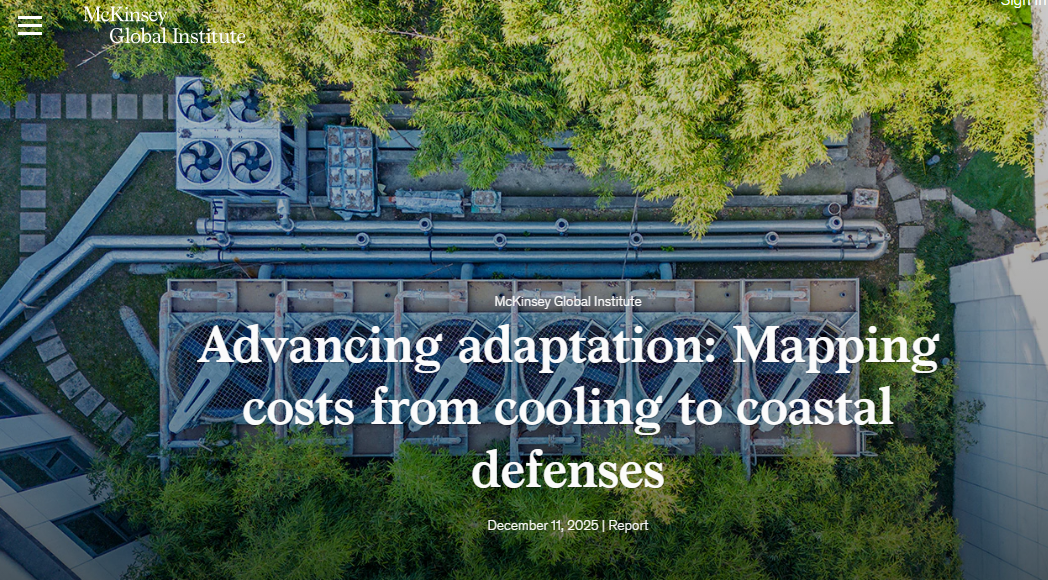
A recent McKinsey report titled Advancing adaptation: mapping costs from cooling to coastal defenses, helps to put some numbers around this, and they may surprise you.
To quote from the report 'the world currently spends $190 billion annually to defend against extreme weather. This safeguards 1.2 billion people to protection standards in developed economies. Providing that level of protection for all 4.1 billion individuals living in places exposed to climate hazards, would cost $540 billion.'
And these numbers will increase materially as we move toward a 2 degree warmer world. McKinsey estimate that if this occurs (as seems likely) then spending will need to rise by 2.5x to maintain current protection levels. And by 6.2x if everyone in the world is to be protected to developed economy standards.
Just to give you a headline - that would come to a massive $1.2 trillion pa. This is equivalent to about 0.8% of 2050 GDP in the areas exposed to climate hazards. So a big number but not unaffordable.
Where will this spending go?
If you based your estimates on press coverage you might be thinking about flood protection, or maybe stopping coastal erosion. Or if you live in Australia or California, wildfires. And yes, these are going to be big buckets of spending.
McKinsey estimates around $0.1 trillion on wildfires and $0.2 trillion on flooding.
But, the real big areas of spending are on heat and drought. Together these would require c. $0.9 trillion pa.
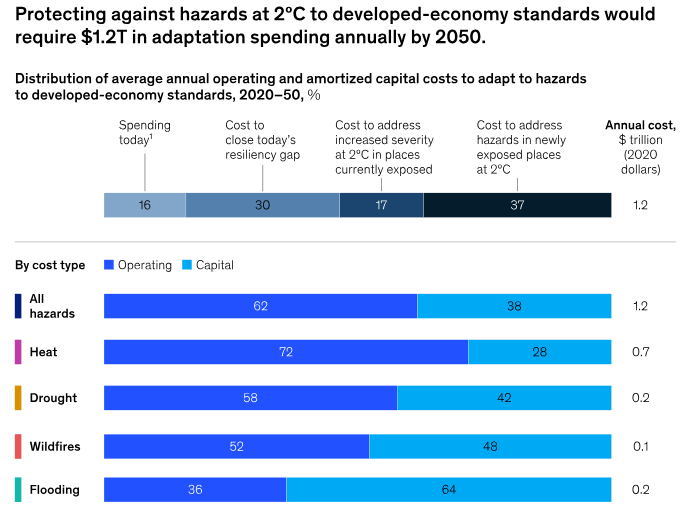
The big spending categories will be keeping people cool (mostly air conditioning, although other options exist) & irrigation (keeping plants and animals alive).
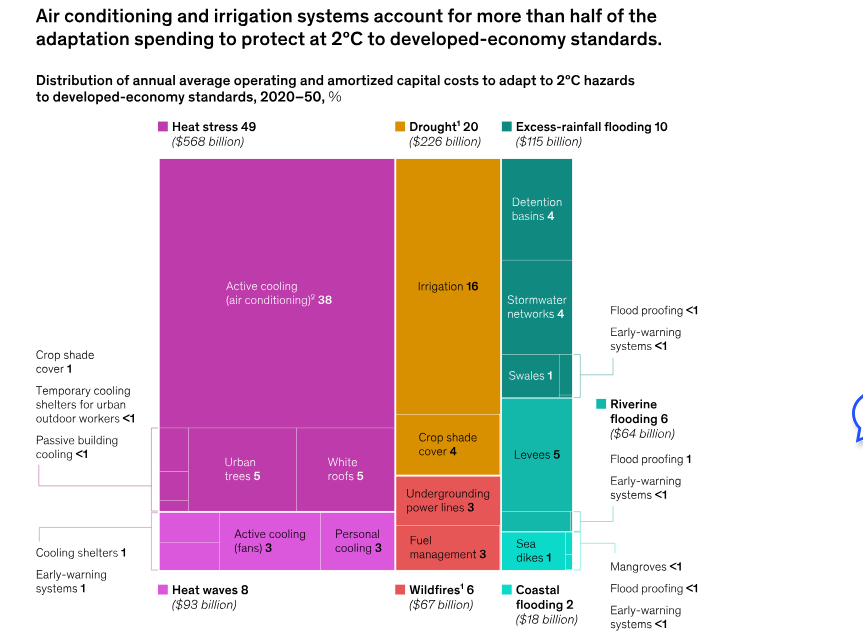
And they estimate that more than half the costs would be incurred by the private sector, so spending by individuals and companies. Something we can invest in.
This feels like a massive opportunity for investors. And it's one with apparently excellent cost/benefit ratios. For instance, air conditioning comes in with benefit to cost ratios of between 3x and 5x.
And it's important to remember, some of this spending (maybe as much as 2/3 of the increase) will go toward new hazards, spending in places that don't currently face these challenges.
One last thought
This is not just about spending on new equipment. For instance, cooling represents a large part of a commercial building's energy footprint. Optimising existing HVAC systems can help to reduce energy usage and hence costs.
However, initial design choices can also increase the ability of a building to passively regulate its temperature which can reduce the burden on energy consuming systems.
 Sandy Jayaraj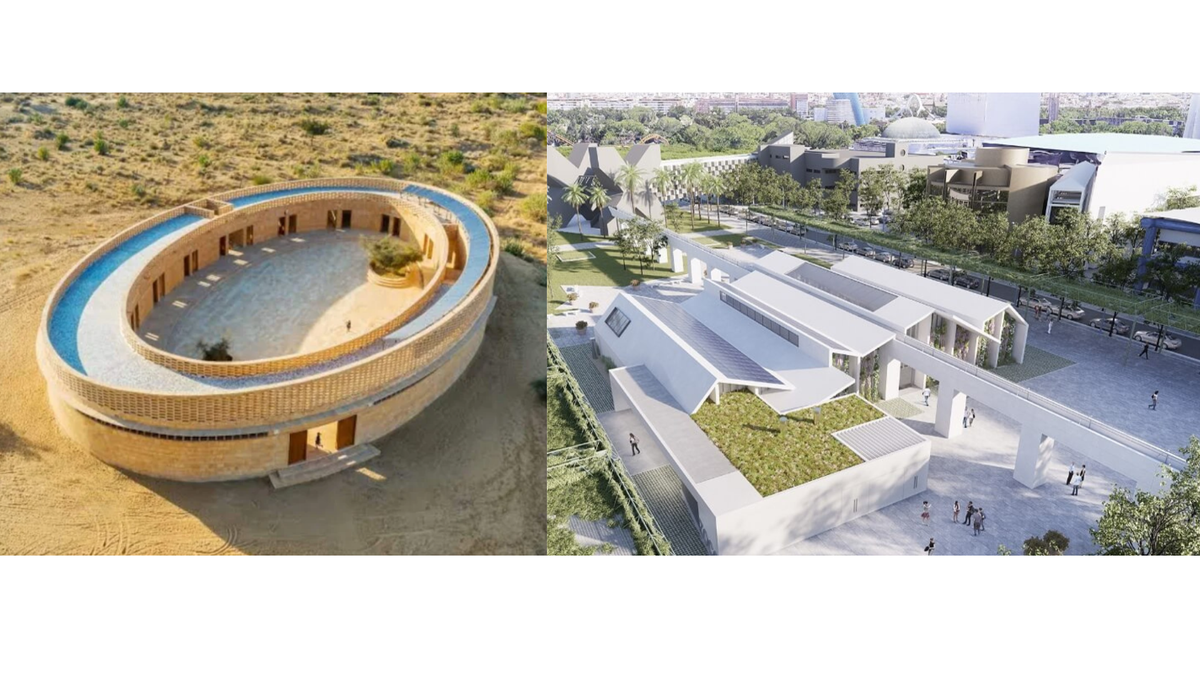
Grant me the strength to accept the things I cannot change, the courage to change the things I can, and the wisdom to know the difference. Reinhold Niebuhr - a Lutheran theologian in the early 1930's
Please read: important legal stuff. Note - this is not investment advice.