Sunday Brunch: fruit & vegetables and the very real climate risk
Disruptions to supply chains create a financial hit for companies in the food industry, especially if their competitors had planned ahead. Climate change will lead to disruptions, especially in countries already suffering heat & water stress. It's better to start planning for this now not later.

In an earlier blog I talked about how even small changes in an investment case narrative can influence how investors think about a company - which then gets reflected in the share price. And then investors can change how they engage or how they invest. It's worth remembering, we do not need the change to be certain, we just need it to be reasonably probable.
 Steven Bowen
A good example of this relates to the changes we expect to see in the supply chains of companies in the food industry. These could be supermarkets, or food processors like Nestle, or companies in the hospitality industry. They all face very real risks of future supply chain disruption. And as investors, we want them to prepare for this.
Where do your fruit and vegetables come from?
I ask because in only a few years time, climate change might mean you have to source from somewhere different. And that is going to be disruptive. Supply chains are not just about farmers, they also need cool stores and processing facilities.
I would argue that a sensible company will start preparing now, even if that incurs some investment costs.
Price inflation is good - until it's too high
If the country where you get your fruit and vegetables from is likely to get hit by even worse climate change, this is probably going to result in higher prices (the same number of customers chasing smaller production will push up prices).
You might think that you can just pass the price increase (inflation) onto your customer. But there is some really good work that shows that this approach can create very real problems. Many consumers react to higher prices by trading down (to cheaper suppliers). And others stop buying the product altogether. And in the world of food, lower sales = lower profits.
So, back to the original question - where do your fruit and vegetables come from?
If you live in Europe your vegetables probably come from Spain or Italy (together around 44% of total production). And your apples probably come from Poland (around 34%). Overall intra-EU trade (between European countries) in fruit accounted for 56% of the total value of the internal trade in fruits and fresh vegetables.
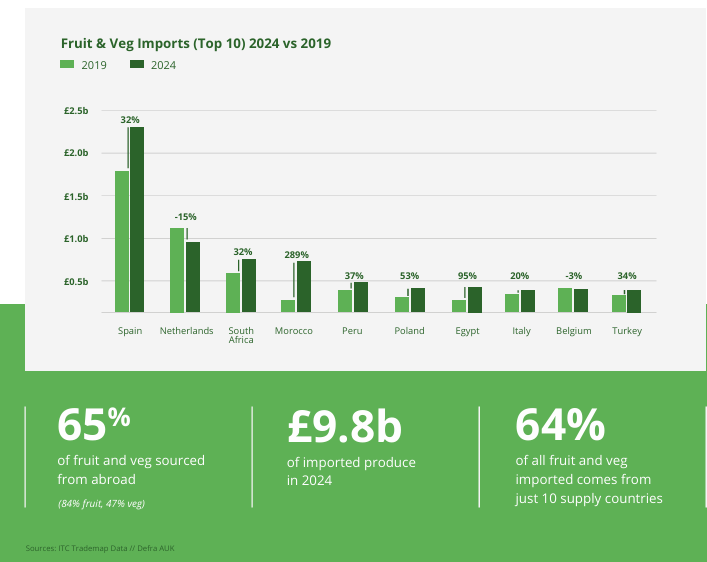
And if you live in the UK, it's worse. As the UK Food Security Report 2024 report highlighted, UK food supplies rely on food imports from countries with high water stress. This includes a large amount of fruit and vegetables from Spain and Morocco where water stress levels are already at around 40 to 50%. To give this context, in 2023, Spain supplied 84% of total imports of lettuce, 37% of lemons and limes, 33% of oranges, and 30% of total fresh or chilled vegetables. A recent Aethr report estimated that nearly 2/3 of all imported fruit and vegetables comes from just 10 countries.
Just as an aside - it's not totally clear if the data includes crops that are re-exported ie imported from elsewhere. This is particularly material for The Netherlands.
Why should we worry about this - after all the system has coped in the past? Let's take Spain as an example.
According to the ATLAS project, nearly 44% of Spain is affected by some form of environmental deterioration, while desertification now touches more than 60% of Spain’s arid zones, covering over 206,000 km².
And extent of semi arid regions and desertification is growing.
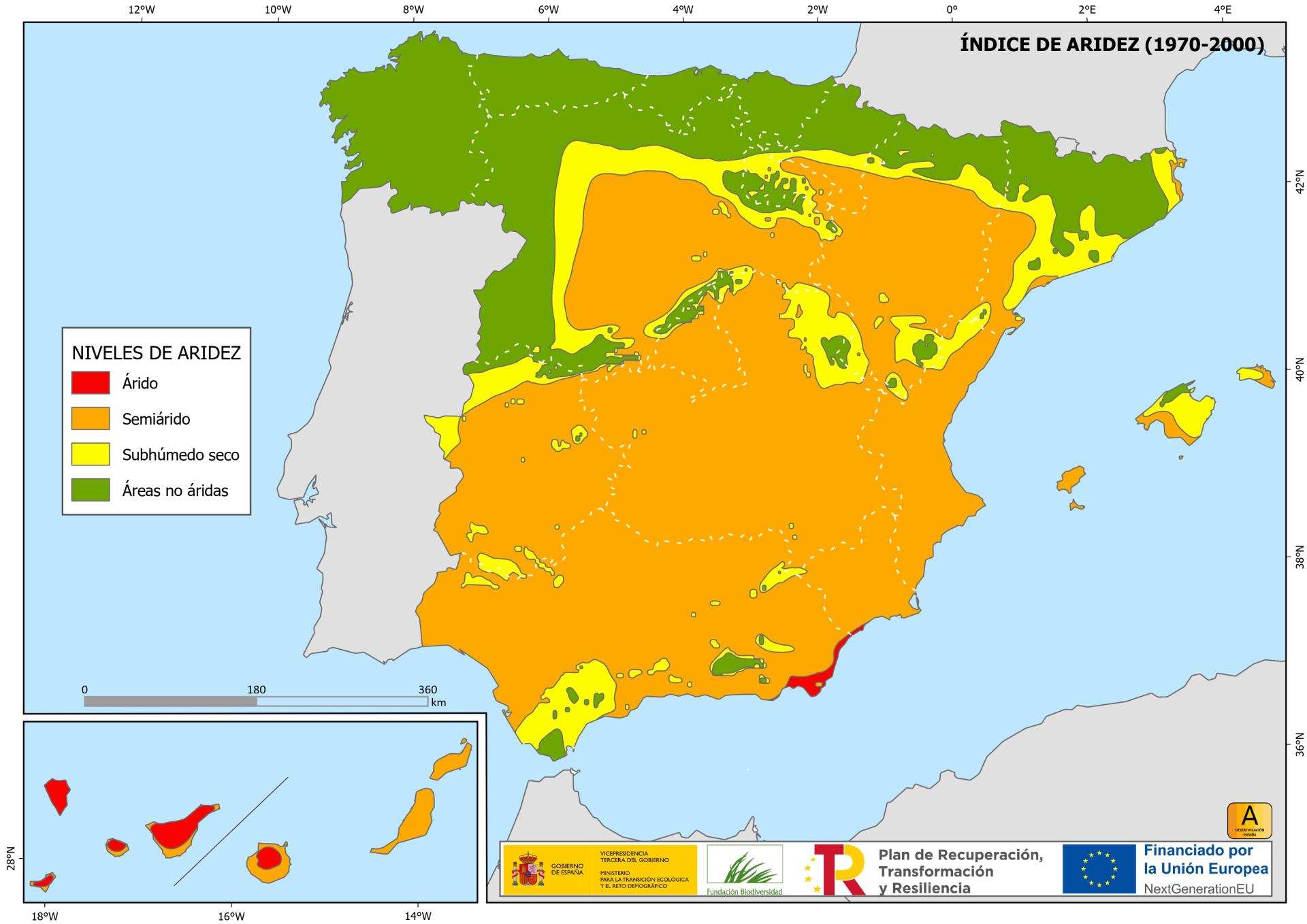
Obviously, we could just shift our sourcing. But as the UK Food Security Report 2024 report referred to above states:
The UK continues to be highly dependent on imports to meet consumer demand for fruits, vegetables and seafood, which are significant sources of micronutrients for consumers. Many of the countries the UK imports these foods from are subject to their own climate related challenges and sustainability risks.
This suggests that rebalancing sourcing among existing suppliers might only solve part of the problem. And while introducing better engineered plant varieties will help, this is also likely to only be a partial solution (and it takes time).
Part of the solution might involve bringing some production 'back home'. This is not an easy process. Not only do you need farmers to start growing what you need, but you also need processing, packing and cool store facilities to be in place. And in some cases you might need investment in the technology to grow the products in less than optimal conditions (greenhouses and even vertical farming). Some countries have specialised in this approach- The Netherlands is a good European example.
The bottom line is that as investors we need companies to talk more about the risks they see coming in the next 3-5 years (maybe longer). And what they are doing to reduce this risk, or even turn it into a new source of competitive advantage.
We know one thing - we don't want our investments to be in the companies that do nothing, and them have to scramble around when the disruption actually hits.
One last thought
More frequent climate extremes will impact our food supplies. Arguably we are past just mitigation and well into adaptation. One crop that could be materially impacted are bananas. The possible future for banana's gives us insights into the risks and opportunities for the wider food supply chain.
 Steven Bowen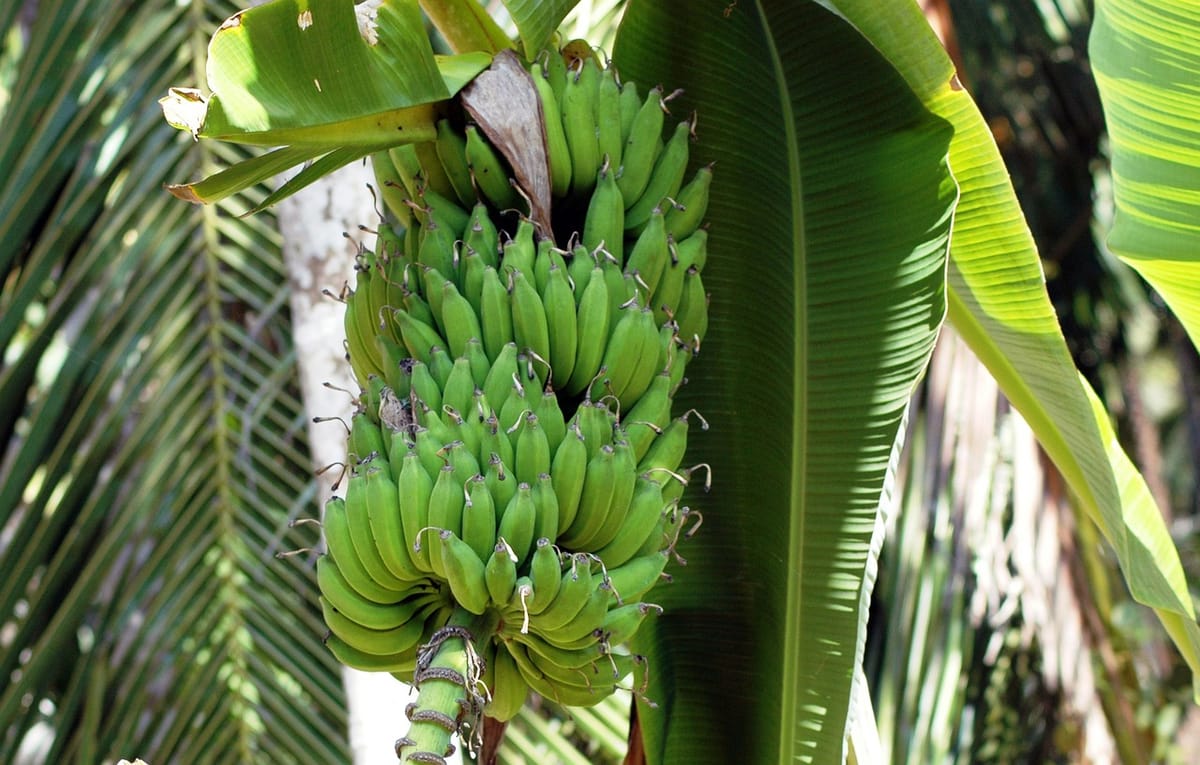
Grant me the strength to accept the things I cannot change, the courage to change the things I can, and the wisdom to know the difference. Reinhold Niebuhr - a Lutheran theologian in the early 1930's
Please read: important legal stuff. Note - this is not investment advice.