
Sunday Brunch: Sustainability, market pricing and canaries
Many people think that financial markets are not yet fully pricing in climate and other sustainability risks (& opportunities). How might this change? One possibility is time. The other is that early warning systems like insurance and debt costs kick in - these could be our canary in the coal mine.

Up until surprisingly recently (1986 in the UK) it was traditional for miners to carry a canary with them. The risk they were looking to avoid was carbon monoxide poisoning. Because carbon monoxide is clear and odorless, miners needed a method for detecting it before it killed them. A canary’s collapse let workers know there was poisonous gas in the air and gave them some warning time to evacuate. Obviously not great for the canary.
The phrase has moved into more general usage to indicate something that gives early warning of a risk - allowing us to take preventative action. But this only works if we take notice.
What might be the sustainable finance 'canary'?
The evidence seems to generally support the view that financial markets are not properly pricing in climate risk. To quote a December 2022 report from the Bank for International Settlements..
"While studies find that these (climate) risks are starting to be priced, concerns are growing that current prices do not fully reflect the risks."
In other words, financial markets are starting to get to grips with the problem, but efforts are still at an early stage.
The report suggests three main reasons for the mis-pricing. First, the nature of the risks limits the availability of risk-sharing arrangements and hedging instruments. Second, there is a high degree of uncertainty about climate risks and concrete policy actions to address them. And third, the information available to investors about climate risks and their consequences is often incomplete or
imperfect.
While all of these are valid, it is likely that the situation will improve, and probably quite quickly. As the risks become more obvious, the resources thrown at solving the challenges will grow. Nothing focuses the mind of a finance institution more than the risk of losing a lot of money.
These points have been made fairly regularly since, including this article in the FT and this article from the World Economic Forum which quotes work by the University of Exeter’s Green Futures Solutions team, in partnership with Carbon Tracker.
 b.d.bampton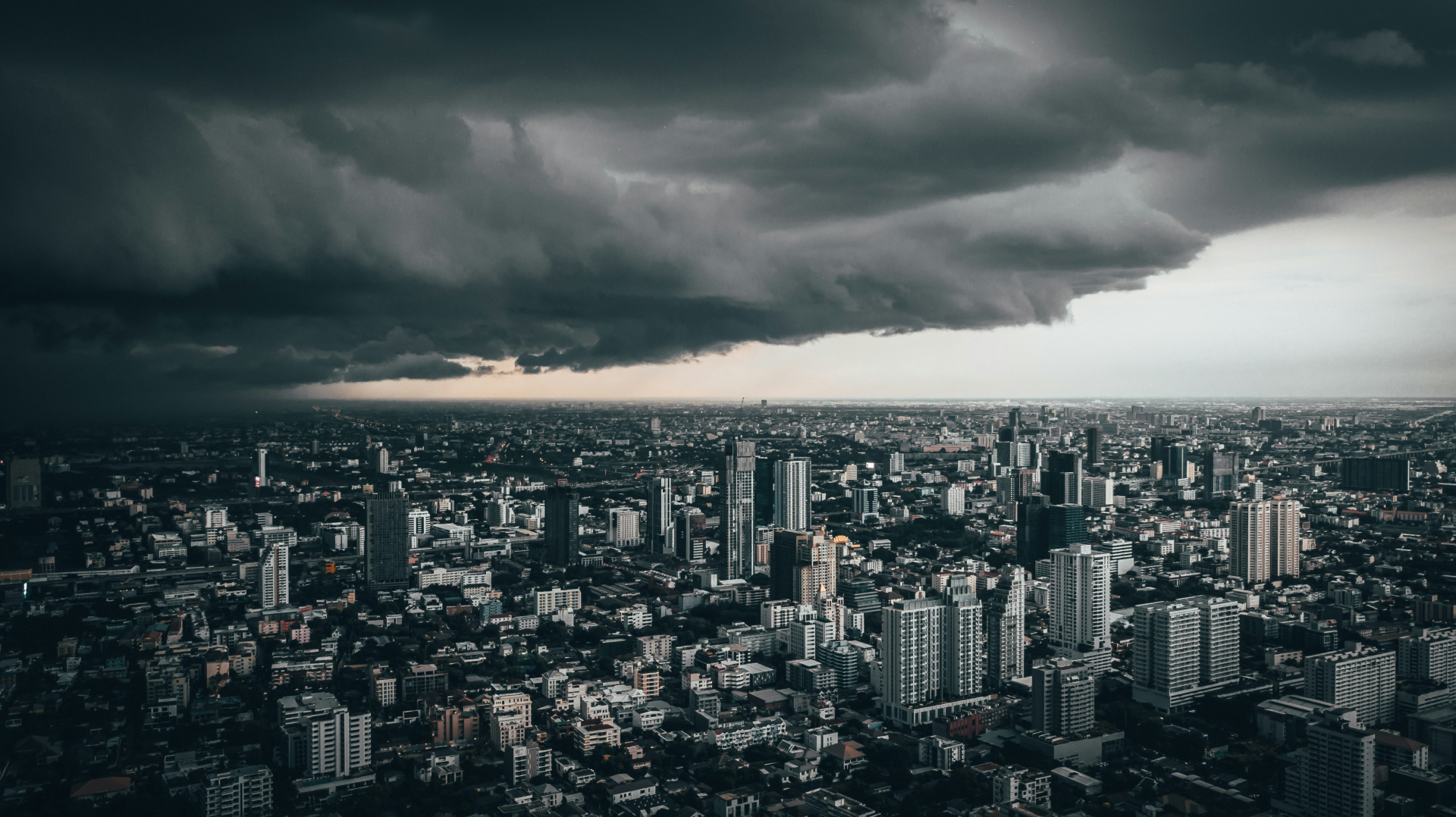
One challenge is that equity markets can sometimes be late to recognise that things are not only starting to go wrong, they are already going wrong at a rapid pace.
Part of this is due to the fact that the equity world is largely populated by optimists (we love to focus on the upside). Plus the Fear Of Missing Out (FOMO) is strong, and so we follow a trend well past its sell by date. We saw this clearly in the 1980's - well portrayed in the book 'Liars Poker'.
So if equity markets can stay too optimistic for too long, what other signals can we use? One is insurance and the other is debt markets. My experience has been that both give really good leading indicators of where equity markets might be in the future.
Part of the reason why this is the case is that both markets are fundamentally more pessimistic. What do I mean by this. Both insurance and lending (debt markets) have a pre agreed and limited upside, but a much larger (and in some cases pretty much unlimited) downside.
If I lend you some money the most profit I can make is the interest you pay me. But my loss could be much larger if you cannot pay the principal back. And an insurer faces a similar return profile. They receive an insurance premium, but the payout they have to make if a claim is triggered will be much larger.
We can already see the insurance market shifting, making some assets and risk effectively uninsurable. As Dr Sophie Taysom recently highlighted, a growing share of real estate risk is becoming uninsurable. She quotes a recent report from the Geneva Association (Addressing Growing Protection Gaps through Better Public-Private Insurance Programmes).

This states that ...
"The disaster protection gap – the uninsured share of economic losses from natural and man-made disasters – is widening. Global natural catastrophe (Nat Cat) losses reached USD 327 billion in 2024, with 57% uninsured."
And a February 2026 paper from the European Central Bank was even more pessimistic. They reported that ...
"Extreme weather events are becoming more frequent and severe, causing significant and growing economic losses. At the same time, research by the European Insurance and Occupational Pensions Agency (EIOPA) shows that only one out of four climate-related losses have been insured so far. This gap in insurance protection varies greatly across EU countries and is likely to widen."
 European Central Bank
This seems to suggest that the insurance market could be a really useful canary for equity investors, highlighting how risks are shifting. But it only works if we listen to the warnings.
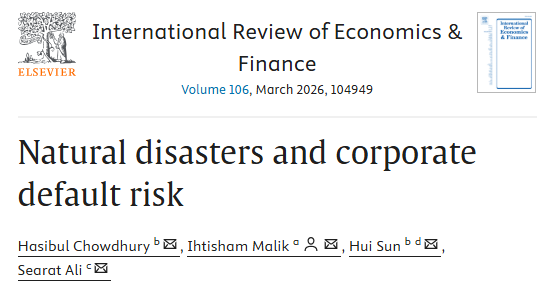
The good news is that debt markets are starting to give similar signals. This is a topic for a future blog, but in the meantime you might be interested in a recent paper from Chowdhury et al in the International Journal of Economics and Finance. Their analysis shows that that firms located in areas with higher disaster intensity face increased default risk. And that as a consequence financial institutions charge higher spreads and impose stricter credit terms on these firms.
And you may remember from an earlier blog - identifying where the market is mis-pricing risk and opportunities can be a good way for investors to generate superior financial returns for their clients (what we call alpha). For many Asset Owners and NGO's this can be thought of as an added benefit - although for the Asset Manger it's a key motivation.
One last thought
Climate events such as floods are now more frequent. While globally a small % of the population lives close to the coast, for some countries (including New Zealand) this figure is much higher. Analysis of the New Zealand situation can help us frame our response. We need to take climate adaptation seriously.
 Steven Bowen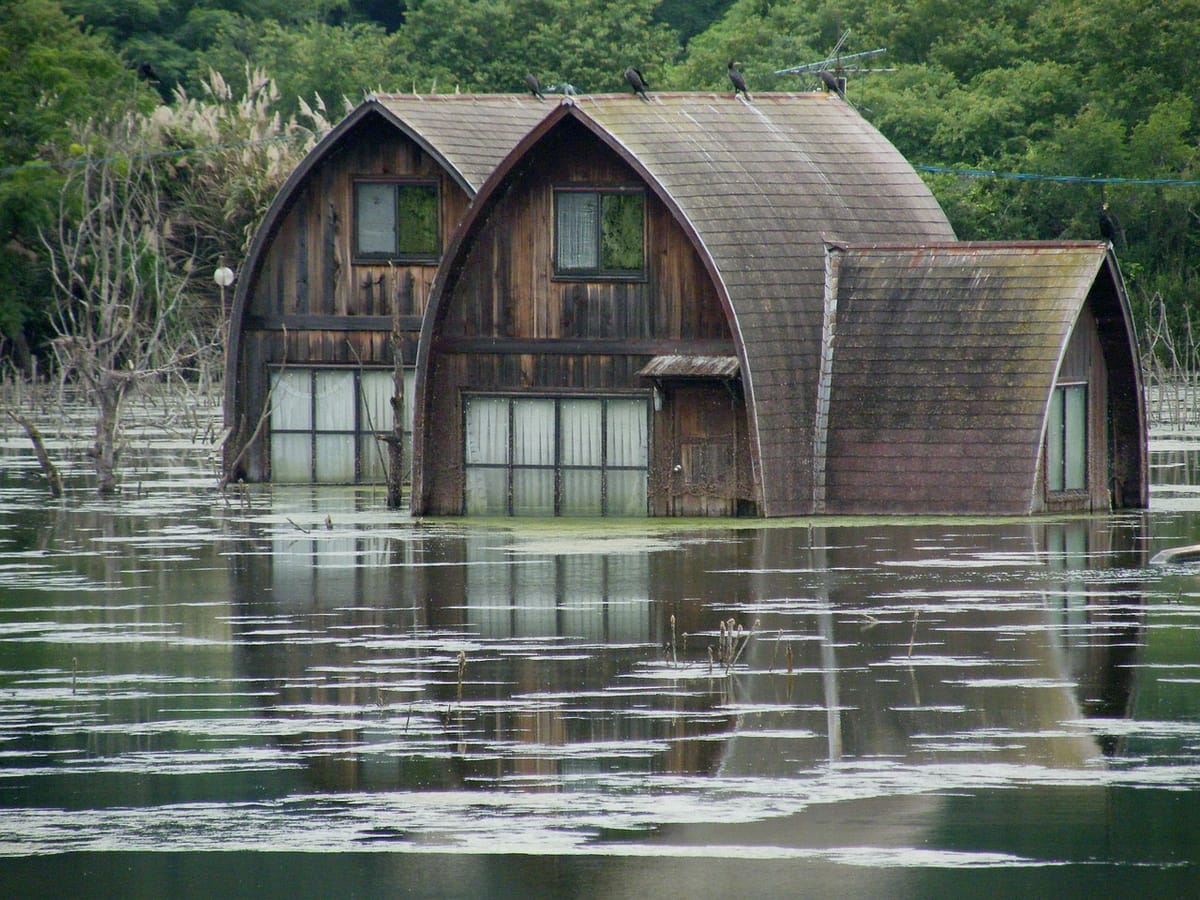
Grant me the strength to accept the things I cannot change, the courage to change the things I can, and the wisdom to know the difference. Reinhold Niebuhr - a Lutheran theologian in the early 1930's
Please read: important legal stuff. Note - this is not investment advice.