Sunday Brunch: What can we learn from the Tobacco Master Settlement Agreement
Back in 1998 the four largest US tobacco companies, and 52 state and territory attorneys general, signed what was boringly known as the Master Settlement Agreement. It changed the tobacco industry. Will social and environmental cases now working their way through the courts bring similar changes ?

Sometimes how existing laws and regulations are applied can change how companies respond to sustainability issues. We don't always need new legislation. Often we can plan for the future just using what we already know (but probably ignore). Looked at in this light, accounting and financial reporting is almost certainly not boring.
Financial modeling has to deal with uncertainty
For many industries, legal cases working their way through the system could materially change the financial dynamics. The outcome of these cases doesn't need to be certain for it to be sensible for investors to prepare and anticipate.
Many people, including those that work in the finance industry, mis-understand how we use forecasts to create valuation models and investment cases. Yes, our financial models that are built around our 'base case' (P&L, cashflow and balance sheet) are important.
But we also have to think about how the world might be different in the future, how the assumptions that drive our financial models can end up being wrong.
The shift away from the base case (which is often really our optimistic case) can be gradual - sometimes so gradual that we don't see it happening (the so-called 'boiling frog' analogy) .
And other times events happen much more suddenly. They make the future world so different from what we initially assumed that our financial models no longer apply.
The US Tobacco Industry Master Settlement Agreement had both characteristics. Before it was announced, we didn't know exactly what it would look like, when it might be signed, and how it might impact the tobacco companies - but we knew that some agreement was likely.
As an aside - just because these events seem to happen suddenly, doesn't mean that we cannot see them coming. Regular readers will know that I am a big fan of Professor Damodaran's Possible, Plausible and Probable framework. We must prepare for different possible futures.
 Aswath Damodaran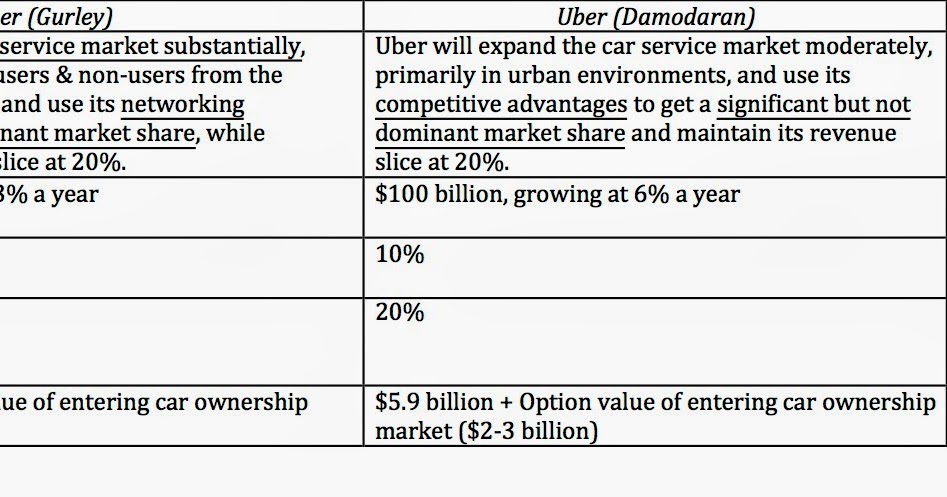
How does this apply to what we are seeing now?
Let's take a tech example first. A few days ago a court in California decided that "Meta, which owns Instagram, Facebook and WhatsApp, and Google, owner of YouTube, intentionally built addictive social media platforms that harmed the mental health of a 20 yr old women named as Kaley". This followed a similar verdict in New Mexico.
I am not a lawyer, and so I don't have a view on the chance that these verdicts get overturned on appeal.
What I instead want to highlight is how this type of legal decision can end up fundamentally changing the investment case for the companies involved. And how we need to study historic situations, such as those that led to the US Tobacco Industry Master Settlement Agreement (MSA), when we want to think about how industries can change.
 Issues
A slight (only slight) digression
Digressing slightly, this week I was going to write about a book launch I attended. The book is The Accounting Paradox, by Jeremy Nicholls, Co-Founder of Social Value International. I say that it's a slight digression as the topics are actually linked.
 Hello
Hello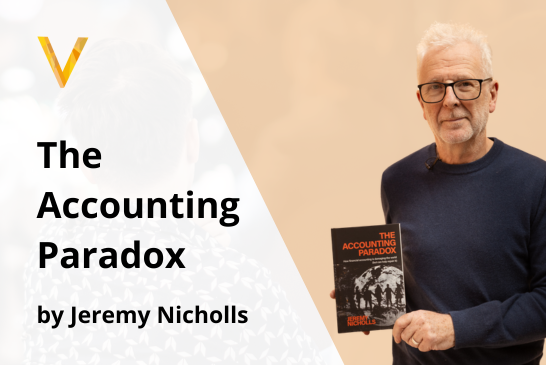
I am just over half way through reading the book, and it's thought provoking. Jeremy's argument is that how we define accounting profit creates a process where some costs (those that the company inflicts on the wider society, but doesn't pay for - so called externalised costs) are excluded. And that this defines how companies and investors make decisions.
But, he argues that it doesn't have to be this way. Accounting standards already allow externalised costs to be included in the calculation of profit, the system just needs to be modified to reflect a wider public interest. He argues that "until this changes, capital markets will continue to invest in businesses that may make profits, but fuel inequality, nature loss and climate breakdown."
It might not seem it but the argument that Jeremy Nicholls is making in his book is closely linked to the Meta case. And one way they are linked is via accounting reporting, specifically accounting provisions and contingent liabilities. If we think that Meta might be forced by the courts to internalise some of the costs they impose on society, then we need them to start setting out what the costs and accounting treatments might be.
These might sound like boring and arcane accounting issues - they are not.
Provisions and contingent liabilities - things companies have to pay in the future.
I want to come back in a future blog and explore the ideas in Jeremy's book a bit more (including how they might be implemented). But for now I want to describe how existing accounting concepts such as contingent liabilities can be used to provide investors with important pointers as to how companies might struggle to create the same financial value in the future. And how investors can include these factors in our investment cases and valuation approaches.
To be clear - not all companies use contingent liabilities in a way that is helpful to investors. In such cases it is not unreasonable for us to demand more information.
One of the important accounting standards is IAS 37. This specifies the accounting for and disclosure of provisions, contingent liabilities, and contingent assets.
A provision is a liability of uncertain timing or amount. The liability may be a legal obligation or a constructive obligation. Most of us understand what a legal liability is - it's a cost that a company has to bear because of regulation or a legal agreement/contract.
By contrast a constructive obligation arises from the companies actions, through which it has indicated to others that it will accept certain responsibilities, and as a result has created an expectation that it will discharge those responsibilities. No legal agreement is needed.
Examples of provisions include: warranty obligations; legal or constructive obligations to clean up contaminated land or restore facilities; and obligations caused by a retailer’s policy to make refunds to customers.
The company recognises a provision if it is probable that an outflow of cash or other economic resources will be required to settle the provision.
If an outflow is not probable, the item is treated as a contingent liability. These are possible obligations whose existence will be confirmed by uncertain future events that are not wholly within the control of the entity.
Hopefully you can see by now that it is possible to think of the Meta court decision as a contingent liability (or if you think it is probable the appeal would fail then it would be a provision). Either way the company should be telling investors.
And it's not only tech where such issues could be hiding. Lubos Pastor from the Booth School of Business (and others) recently published a paper on the carbon burden that companies impose on society. One number leapt out at me and it's worth repeating ....13% of firms have a carbon burden that exceeds their entire market cap. Their expected future harm to society is literally larger than their value to shareholders.
Even ignoring the debate (that I am sure that Jeremy and others would happily join) on is this right - it's not unreasonable for investors to think that at some point governments and society will seek to correct this imbalance. Good questions for investors include how might this happen, how can I prepare, and what information do I need companies to disclose on this possible future risk?
One last thought
Funding sustainability cannot just be a debate about which funding source - we also need to understand how willing the end consumer is to foot the bill. Or putting it in simple terms, who pays. Because someone has to. And who gains? Is it always the same 'person' that pays?
 Steven Bowen
Grant me the strength to accept the things I cannot change, the courage to change the things I can, and the wisdom to know the difference. Reinhold Niebuhr - a Lutheran theologian in the early 1930's
Please read: important legal stuff. Note - this is not investment advice.