Sunday Brunch: What does mispricing climate risk mean?
Are financial markets mis-pricing climate related risks? This is not just about global issues such as the macro impacts of climate change. It's just as much (if not more) about the very specific risks that individual companies face. It's these individual risks we also need to clearly identify.

There is a general consensus, at least among investors, that financial markets are not properly pricing in climate risks (I want to discuss other sustainability risks in a future blog). What does this statement mean? And how can we as investors help to correct this?
It's really important that we are (as investors) clear about what we mean when we talk about mis-pricing climate risk. If we get this part of the process wrong, we are unlikely to be asking the right questions (and making the right demands) of the companies we are invested in.
What exactly is the market mis-pricing?
I would argue that financial market mis-repricing of climate risks broadly has two (overlapping) elements. And one is way harder than the other to mitigate (at least if we are talking solely about actions by companies and investors).
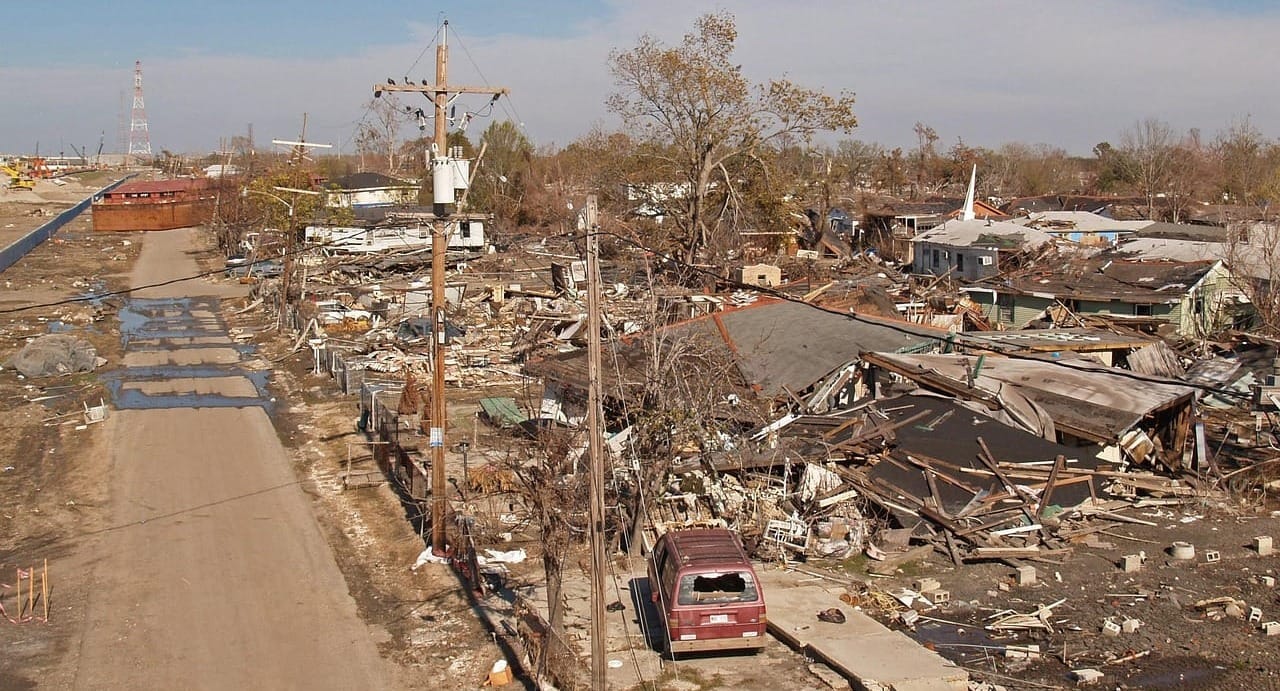
Part of what is potentially being mis-priced is the longer term risk that the impacts of climate change will materially and negatively impact our wider financial system.
A recent report from the Institute and Faculty of Actuaries (IFoA) and the University of Exeter (UofE) warns that, without action, global warming is now likely to reach 2°C before 2050, a level associated with catastrophic impacts on societies and economies worldwide, with major disruption to water and food systems, migration, and human health.


As the IFoA report above highlights, this is clearly not a good outcome for our wider society.
How might investors react to this information? It depends a bit on their motivation. As Ellen Quigley so eloquently points out in a recent Journal of Financial Regulation article ...
"An impact-seeking universal owner may therefore deny primary market capital to companies engaging in substantial cost-externalizing behaviour—those that are engaging in fossil fuel expansion activities (for example, utilities building new coal or gas power plants)."
As she points out in the same article ...
The vast majority of negative climate impacts come from a small number of large players. Altering the behaviour of these few high-impact companies could mitigate a large proportion of the harms of climate change.
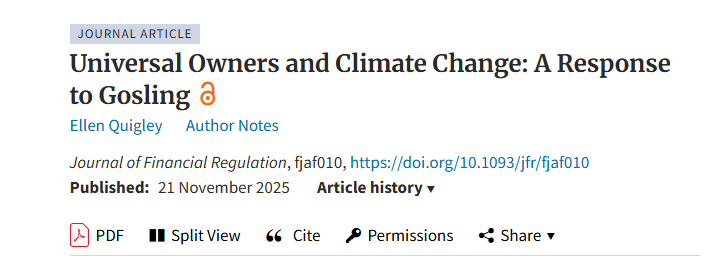
If you want to read the initial research by Tom Gosling that prompted this response (it's well worth a read), it can be found here. This is a really important debate. But it's not the only example of climate impact mis-pricing.
There are also a whole series of other mis-pricings that are likely to impact many companies. And this are often impacting now (or soon), before the '2 degrees by 2050' case that the University of Exeter report referred to above highlights.
Jason Mitchell, the CIO for Responsible Investment at Man Group put it really well in a recent article he wrote for Responsible Investor (currently not behind the pay wall).
 Guest Writer
He starts by making the point that there is a strong case that investors, especially in public markets such as listed equities, are not doing enough to price climate adaptation risk into their portfolios.
But that is not all he says. Perhaps more importantly, he thinks that they are also failing to properly understand the relationship between an asset's price/value (such as a share or bond price) and an individual companies specific physical risks. The focus here, at least for me, is on the words individual & specific. Each company faces it's own risks.
Understanding these is subtly different from stress testing portfolios on a 25 year time horizon.
Let's take a food related example. Hannah Ritchie at Our World in Data (one of our regular 'go to' sources) has looked at how climate change is already impacting food production, and how this might change in the future.


She makes the point that ...
"The impact of climate change on yields will depend on several factors: the type of crop, how much warmer the world gets (which will depend on how quickly we reduce our carbon emissions), where in the world you are, and what we do to adapt."
The article then goes on to consider how the big crop groups (mainly maize, wheat, soybean, and rice) may be impacted. And this big picture analysis is (again) really important.
But at an individual company level (which is where most investors act), we need to know something slightly different. What we need to know is which food commodities/products the company is most exposed to, what they are doing to mitigate and manage this exposure, and how this might then impact then financially.
For instance a company like Starbucks is probably most exposed to coffee production, supply and pricing. A company like Danone might be most exposed to diary. And a food retailer like Carrefour might be most exposed to meat, dairy, coffee, cocoa (chocolate), and say fresh fruit & vegetables.
And each of these have very different drivers and impacts. Which change a lot depending on where in the world we are sourcing from. And they will probably be very different from those impacting say rice or maize.
It's these specific exposures that we need companies to report on, describe the mitigating actions they are taking, and set out the possible impacts. It's very granular.
Hopefully now you can see that the two potential market mis-pricings are very different from an investors perspective. And hence the information we need, and the engagements we will undertake, will also be very different.
This is why we need to be clear about what we mean when we say market mis-pricing. It's not just a question of time scale, we need to understand the very company specific exposures and risks.
This is not to say that either risk and mis-pricing is more or less important than the other. It's just different. They require different data and analysis, and different actions by investors. I would argue that the second set on mis-pricings are probably easier for investors to act on, but your view might be different. It depends on your location, priorities and perspectives.
One last thought
Funding sustainability cannot just be a debate about which funding source - we also need to understand how willing the end consumer is to foot the bill. Or putting it in simple terms, who pays. Because someone has to. And who gains? Is the winner the same 'person' that pays?
Not examining this question properly can mean that we load too much cost onto one group, and in the process lose their support for the important changes we need to undertake.
 Steven Bowen
Grant me the strength to accept the things I cannot change, the courage to change the things I can, and the wisdom to know the difference. Reinhold Niebuhr - a Lutheran theologian in the early 1930's
Please read: important legal stuff. Note - this is not investment advice.