Sunday Brunch: Which climate challenges can the private sector actually fix?
We know that we need to act on climate mitigation but who should be taking the lead? I argue that the mitigation challenges primarily need a policy/societal response. There is still a lot that companies can do. But in many cases society must take the lead.

I recently took part in a debate, part of a sustainable finance course hosted by the Oxford Sustainable Finance Group. The topic was 'which approach was most likely to redirect finance toward agricultural sustainability investments - policy changes or a better understanding by companies of the future risks they will face'. Perhaps unsurprisingly the answer was a bit of both - but the vast majority of participants on the course felt that policy change was the more important driver.
And despite my taking the side of 'the importance of a better understanding of risk', I have to broadly agree.
You might think that discussing what we can 'ask' companies to do is an odd question. After all most sustainability and climate challenges can be traced back to the actions of companies. And so at one level it makes sense to 'demand' that companies take the lead in fixing them. And sometimes this makes sense. But not always.
In many cases solutions, especially those that relate to climate mitigation, require action by governments, regulators and society. They need to lead. And companies will follow. To spend our scarce resources (time and money) demanding that companies lead the change takes pressure off governments. I will explore which things companies can sensibly 'fix' in a later blog - but for today I want to focus on why, for many sustainability challenges, we need to focus first on governments.
Before setting out my own logic from the perspective of an investor, I want to be clear. None of these ideas are radical or new. People have been setting out why companies are the wrong mechanism to fix climate mitigation (but not adaptation, transition or most other sustainability issues).
Diane Coyle argued back in 2021 that "the demand that corporations adopt voluntary standards for environmental, social, and governance was the wrong way to correct societal ills such as pollution, emissions, and economic inequality".
More recently Frédéric Ducoulombier, the programme director at EDHEC Climate Institute argued that "the real story is not one of abandonment, but of increasing friction as ambition meets implementation at a time when targets can no longer be viewed as costless signalling devices." I other words, the current approach is not working.
 IPE
IPE
And Tom Gosling has consistently argued that the theory quickly runs into problems when in contact with reality, in other words our ability to drive change by focusing on companies is less than we think.
So back to the pitch from an investor perspective. To me it's all about does the approach of pushing companies to drive change actually work?
Companies, and the finance industry, largely don't lead, they follow. They follow demand changes, new technology (new ways of producing goods or services), and of course they follow expected & upcoming regulation. Yes, they can sometimes get ahead of the curve and find ways of using technology to meet (sometimes unexpected) demand - think the smart phone. And they can help to nurture new markets, by providing the necessary infrastructure - think EV charging or battery production.
But what they largely will not do is invest in providing goods and services for which there is no profitable demand, maybe ever. And they will not stop producing goods and services for which there is a continuing demand (providing it's still legal).
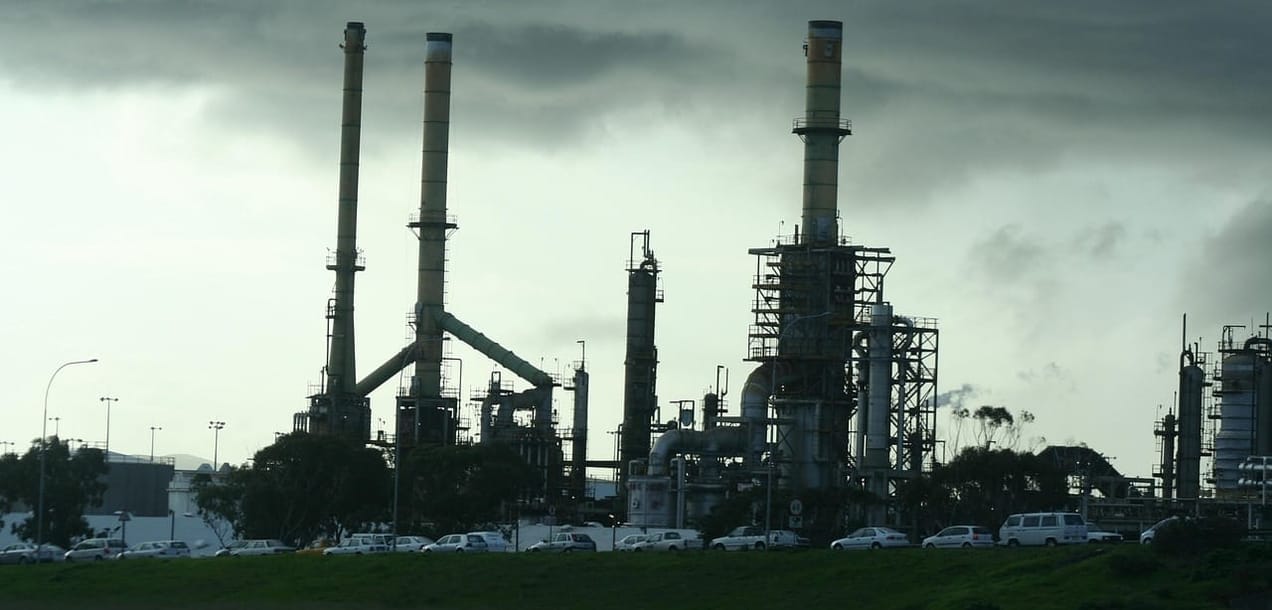
Despite this many groups are still looking for companies to effectively take the lead, via actions such as not funding new O&G exploration, or phasing out the production of petrol and diesel cars. To my mind these are actions that need to be led by governments (and societies). Yes, investors and companies can do a lot, but it's up to us as a society to set the rules.
To be clear, none of this gives companies a free pass to keep doing the same things as before. As investors we need to keep holding them to account for their long term financial performance. Which means intelligently planning for the future, and not just working on the principle of 'business as usual'. But this holding to account will likely be mostly related to climate adaptation and transitions, not out and out mitigation.
And of course a similar logic applies to most other sustainability related challenges.
I was reminded of this debate as I listened to a recent Bloomberg interview of Lisa Sachs, the director of Columbia University’s Center on Sustainable Investment.
 Akshat Rathi
Lisa makes two key points (at least I think they are key - she might feel other points are more important !).
First - better disclosure on it's own is not working. She paraphrase's the Mark Carney speech from 2015, which said that if we "get companies to disclose information about their climate risk, about their emissions, investors can then take those risks on their balance sheets and thus, as a result, start to put money towards solutions that will tackle the problem". Companies are (by and large) disclosing, and it's not tackling the problem.
Just as an aside - my view is that while this is true, it doesn't mean that disclosure isn't necessary. It's just that on it's own it's not enough. As investors we need to do something with that disclosure, we need to act .
Second - while companies can't lead on making markets that don't exist financeable, they do have unique expertise in understanding what is financeable. And many of the climate mitigation measures needed will create massive market opportunities. As Lisa Sachs put's it ...
"the investments that are needed to create a clean, efficient economy are billions, if not trillions of dollars of investment opportunities that financial institutions will want to invest in when we make them financeable."
In other words, once we work out how to make these investments financeable (ie profitable) the money we need will likely follow. And by making them financeable, we don't just mean throwing money at the problem. Yes, future revenues and profits are important, but investors and companies also worry about risks. Things like offtake (who is going to pay me for my product if I am not selling to the end user), political (will the government close me down or nationalise me), regulatory (will the rules change mid period), and construction (has this asset been successfully built before, on time and on budget).
This later risk can be more important than you think. A study of 16,000 major projects—from large buildings to bridges, dams, power stations, rockets, railroads, information technology systems, and even the Olympic Games—reveals a massive project-management problem. Only 8.5% of those projects were delivered on time and on budget, while a mere 0.5% were completed on time and on budget and produced the expected benefits. In other words, 99.5% of large projects failed to deliver as promised. Simple and modular projects did best.
 Steven Bowen
I am not making these points becuase I want to block change. In fact it's the opposite. I passionately believe that we need change. Business as usual should not be an option. But, to be successful we have to be making our demands to the right people. Otherwise we are wasting our effort (and our time).
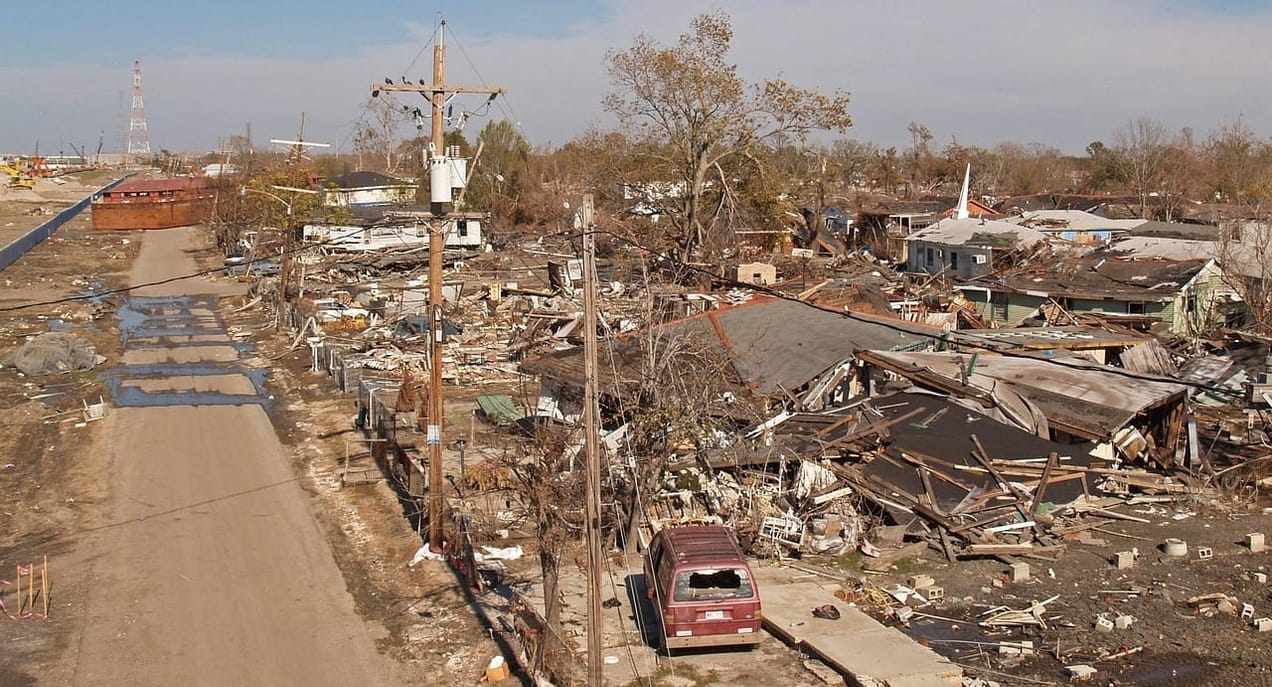
Politicians are often the only ones who can write the new rule book, which in turn will encourage companies to divert investment. Companies by comparison normally respond best when we are looking at adaptation risks (responding to the negative impacts we know are coming - such as floods or droughts) and transition events (likely upcoming new demand patterns and regulatory changes). These are issues I want to come back to in future blogs - what can we actually demand of companies?
And finally we have to remember that politicians can change their minds. The best policy change is one that is led by societal pressure. Or as we argued back in Feb 2025, most politicians follow not lead.
 Steven Bowen
One last thought
Companies (and many of their shareholders) respond best to issues that impact their long term profitability. Sustainability issues are often strategic issues for companies, with clear valuation creation implications. But not all sustainability issues have financial implications.
 Steven Bowen
Grant me the strength to accept the things I cannot change, the courage to change the things I can, and the wisdom to know the difference. Reinhold Niebuhr - a Lutheran theologian in the early 1930's
Please read: important legal stuff. Note - this is not investment advice.