Sunday Brunch: are we making climate impacts worse rather than better?
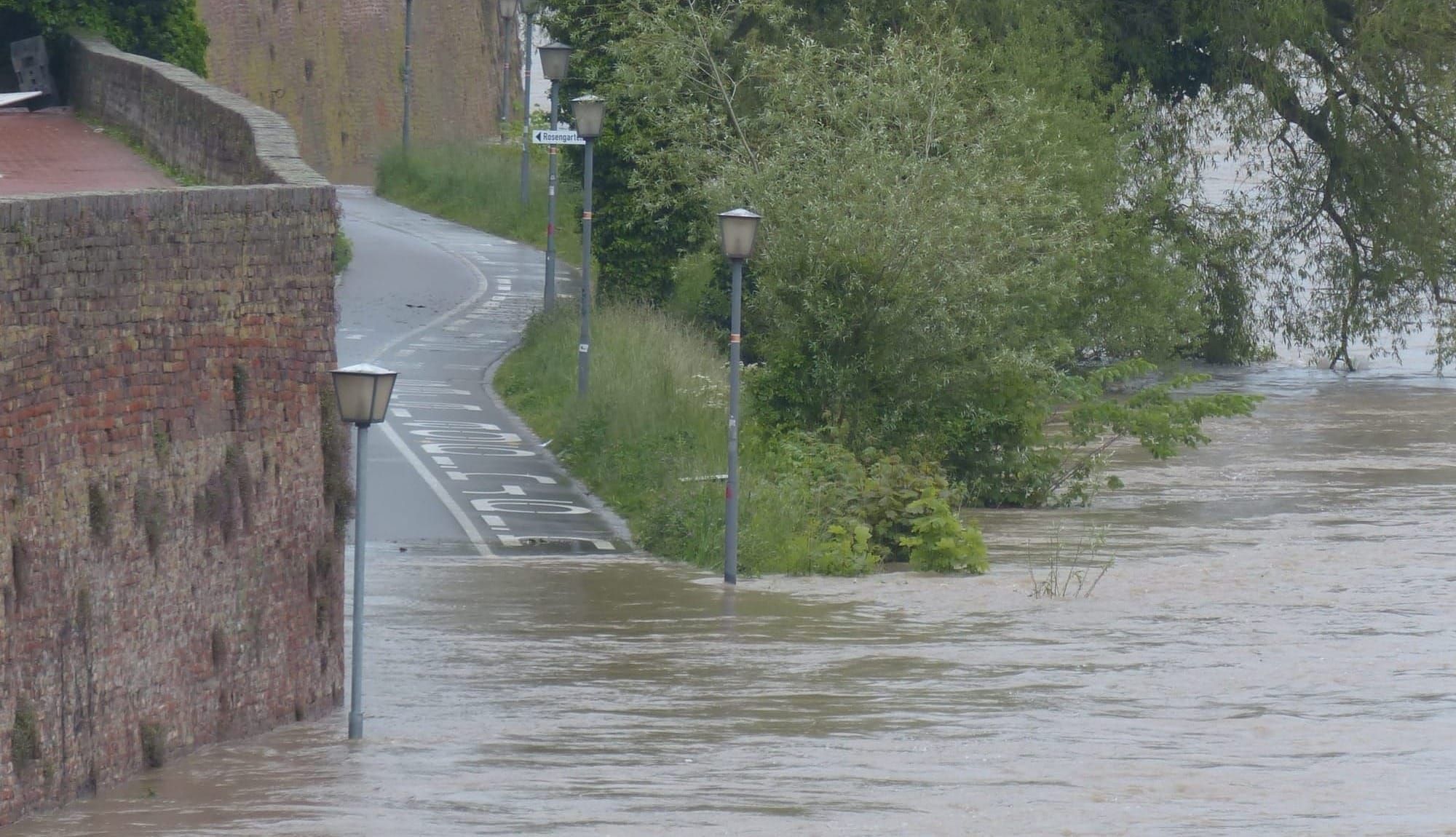
Flooding is one of the most damaging impacts of climate change. But not all of the risk comes from changes in precipitation patterns. How we deliver increasing urbanisation also plays a part, as we concrete over nature's natural defenses. This is an extra risk for investors we need to prepare for.

"Floods are Europe’s most frequent and costliest natural hazard, with total economic losses climbing steadily, to E226 Billion in the first quarter of this century." – Allianz: Europe under water 2026
As investors, we need to ensure that we don't think about hazards in silo's. Sometimes the cumulative impact can be much worse.
Dr Sophie Taysom recently flagged a report from the Quarterly Journal of the Royal Metrological Society (I am guessing this is not standard reading for most investors). This showed that increasing urbanisation is making the impact of more intensive rainfall patterns materially worse. Put simply, we are making the problem worse, not better. And for investors this could mean that our flood risk models are under-estimating future losses.
Which raises the question of who carries this risk? When do some risks stop being insurable? And what does that mean for the value of our assets?
We know that climate change is impacting the frequency and intensity of rainfall, leading to more 'flash floods'. And flash floods cause more property damage as our urban storm water systems struggle to cope with more rain in a short time period. Most investors are also aware that (quoting from the research report) that "the extent of urban areas in 1-in-100 year floodplains is estimated to have doubled globally between 1985 and 2015". Basically, more & more of us are living and working on flood plains.
Does the Royal Metrological Society analysis mean we are under estimating the risk we are facing ? Probably yes. The practicalities of increased urbanisation (concreting over farms and forests) are making the problem worse, not better. And not a little bit worse - a lot worse.
Should that change how we think about risks to our loan portfolios and physical assets? And should it also change how we think about the indirect risks - power cuts as substations get flooded, and more serious flood damage as waste water treatment plants get overwhelmed?
Before thinking about the risks to investors, lets discuss the research.
What does the research say ?
The authors carried out an impact event attribution study examining the effects of both climate change and urbanisation on a flash-flooding event in the U.K. city of Leeds. By way of background, the flash flooding event studied was in Leeds City (UK). On the 8th August 2014 very high rainfall totals of 80 mm fell in places in five hours, with over 400 properties impacted by the consequent flooding.
All in all a fairly typical urban flash flood, something that is happening everywhere. And something that is statistically happening more frequently.
What the study authors wanted to disaggregate was how much of the flood impact was due solely to changing rainfall patterns (the base case was 30 years before), and how much was due to increased urbanisation.
The analysis showed that the impact of urbanisation materially increased the impact over and above that from what we would expect from just changes in rainfall patterns.
For those who like numbers, the risk increase just from changes in rainfall was +16%, meaningful on it's own. Especially as these events will now happen more frequently. But, the really interesting result was that the increase from urbanisation was +29%. Together the flash flood impact was 49% higher than 30 years before.
And the bulk of this was something that we did (urbanisation). As an investor your flood risk analysis would probably have come up with the +16% number, meaning that the real risk was roughly 3x your estimate.
What might this mean for investors?
Starting with the big picture. The German based insurer Allianz recently set out the potential impact of flooding for Europe.
To quote their report "Floods are Europe’s most frequent and costliest natural hazard, with total economic losses climbing steadily, to EUR226bn in the first quarter of this century. While flood frequency in Europe has remained broadly stable at 46 events per year since 2000, their cost has risen sharply. Losses from floods climbed 17.8% from EUR63.1bn between 2000-2009 to EUR 74.3bn from 2010–2019. From 2020-2025 alone, the cost reached EUR88.6bn."
And as they point out, insurance covered only a fraction of the damage.

It's true that many of these costs fall on governments and civic society. But there are also risks for investors. For instance, increasing levels of flood damage and frequency can impact mortgage loan books. Taking the UK as an example, building insurance for flood cover is a key condition of all mortgages. This not only protects homeowners, it also reduces (but does not remove) the risk for lenders.
But what if home owners cannot obtain flood cover at reasonable rates? The UK has a scheme (Flood Reinsurance) which aims to ensure the availability of insurance for homes at high risk. But this is increasingly under strain. As the insurance industry put's it, for this scheme to be viable "it was intended that there would be appropriate investment in flood defences (existing and new) and that individual homeowners would take steps to protect their homes and make them more resilient to flooding."

But increasing flood risks and inadequate flood defence spending means the gap is getting bigger. Much of the focus of the debate has been on new mortgage lending, will people be able to get a mortgage for a house in a high risk area?
But what about the existing stock of mortgages? Who carries the risk if flooding becomes more prevalent?
And it's not just homes that will be impacted. Many of our factories, offices and commercial buildings are likely to be on flood plains. What use is a flooded factory, especially if it becomes un-insurable. And what about second order risks such as flood related power cuts ?
Investors don't seem to have enough data on these risks. As a recent RICS report points out, market data for flood affected commercial property is sparse, and comparable sales data is hard to come by. But as the risks become clearer, will insurers and lenders be less and less willing to be involved with higher risk assets? In which case are we looking at having to relocate at risk facilities?
What I take from the Leeds study is two fold. First, we may be materially under estimating future flood risk, especially in urban areas. And second, we need to find ways to stop making the problem worse.
One last thought
The good news is that solutions exist, solutions that have already been proven to work. Implementation will mean a rethink of surface flood protection in our cities, and this will raise tough questions around who pays? For instance, over the last few years London, like many cities around the world, has been hit by a series of disruptive and expensive floods, mostly caused by intense heavy rain falling on impervious sources such as concrete.
 Steven Bowen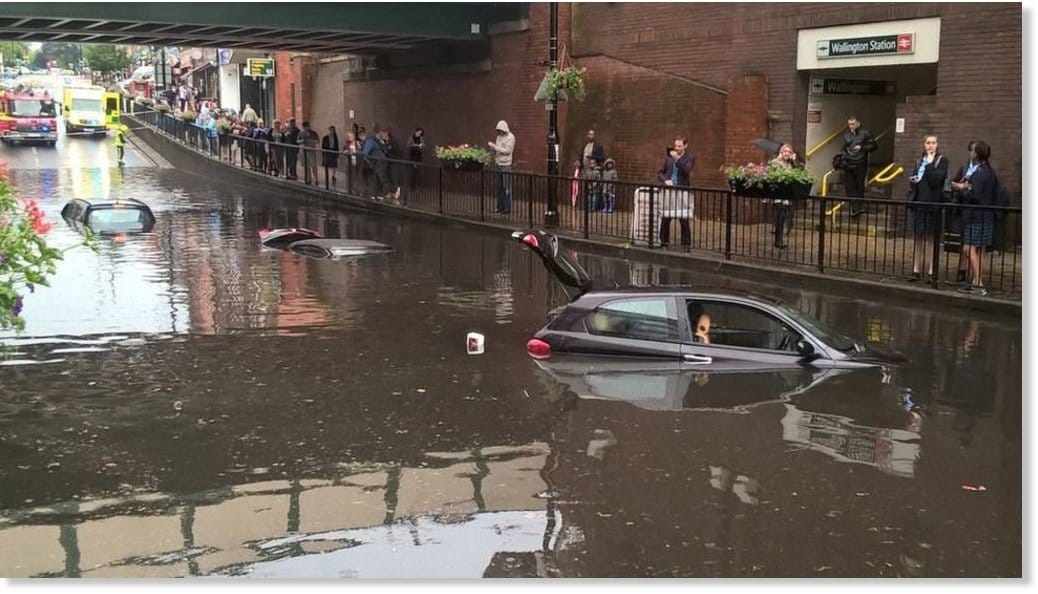
Grant me the strength to accept the things I cannot change, the courage to change the things I can, and the wisdom to know the difference. Reinhold Niebuhr - a Lutheran theologian in the early 1930's
Please read: important legal stuff. Note - this is not investment advice.