Sunday Brunch: old problem in need of a new solution?
Sometimes the old way of operating reaches the end of the road. Then we need a new business model, one that reflects how the world actually works. Home heating in countries with expensive electricity could be our real world example. Could heating as a service be an answer?

There is a broad consensus that replacing gas boilers with renewable based heating such as heat pumps is an important element in reducing green house gas emissions. And it can be good for the consumer, if electricity prices are not to high relative to gas. This is great in countries where the economics work, but what about those where the electricity price is too high?
In these markets it's very possible that it doesn't matter how high the subsidies are for installing new heat pumps, if the operating economics don't work, not enough households' will switch. In such markets another possible approach is heat as a service, where consumers do not buy a heat pump and electricity, they instead purchase heat (the output not the input).
As investors we have to be open to alternate ways of solving a challenge. The 'best' solution is not always to keep doing the same things as before, but with government subsidies to 'smooth the path'. Sometimes we need to find a different business model. The team at Living Places have been working on this for a while, is this an idea whose time has finally come?
Residential heating represents 17% of the European Union (EU) energy consumption, yet its decarbonisation remains challenging with most buildings still reliant on fossil fuels. We know the 'best' response from a sustainability perspective. A recent Nature Climate Change article identified that a widespread deployment of heat pumps and targeted energy renovations could reduce residential heating emissions by up to 82% by 2050.
And in some countries, progress has been made.
According to the European Heat Pump Association heat pump sales in 2025 grew by 10.3% across 16 European countries. Around 2.62 million residential heat pumps were sold, bringing the total installed in Europe to around 28 million.
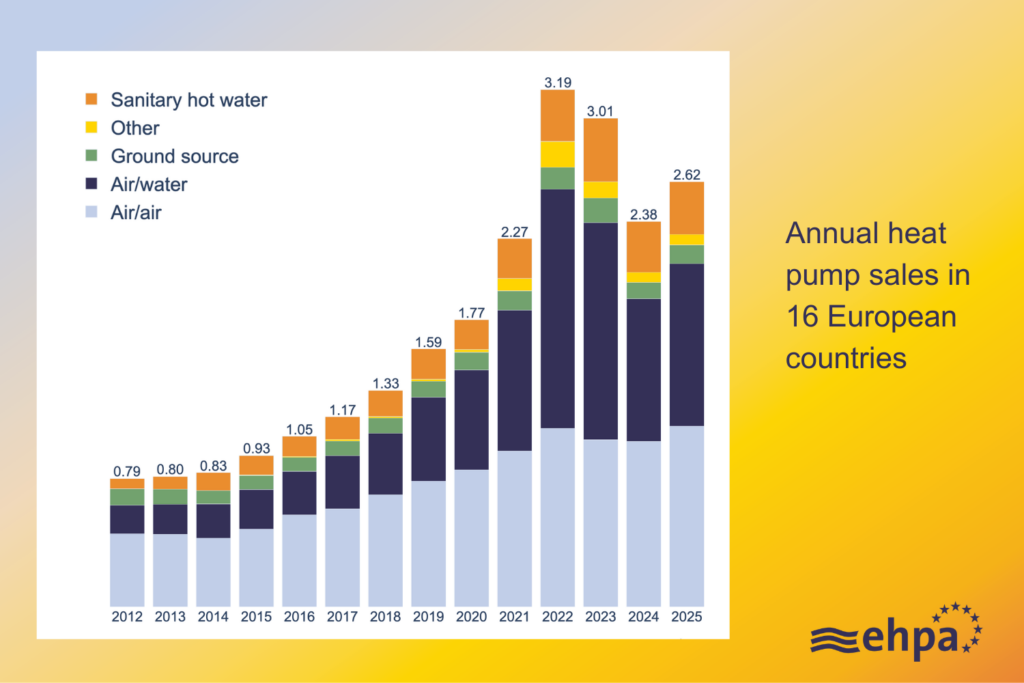
The association suggests that growth has largely happened where "governments have stabilised subsidy schemes and taken action on costs, for example by reducing tax on power bills. This makes heat pumps – which use a small amount of electricity – highly competitive with fossil fuel boilers.
But what about markets such as the UK, where electricity prices are high relative to gas?
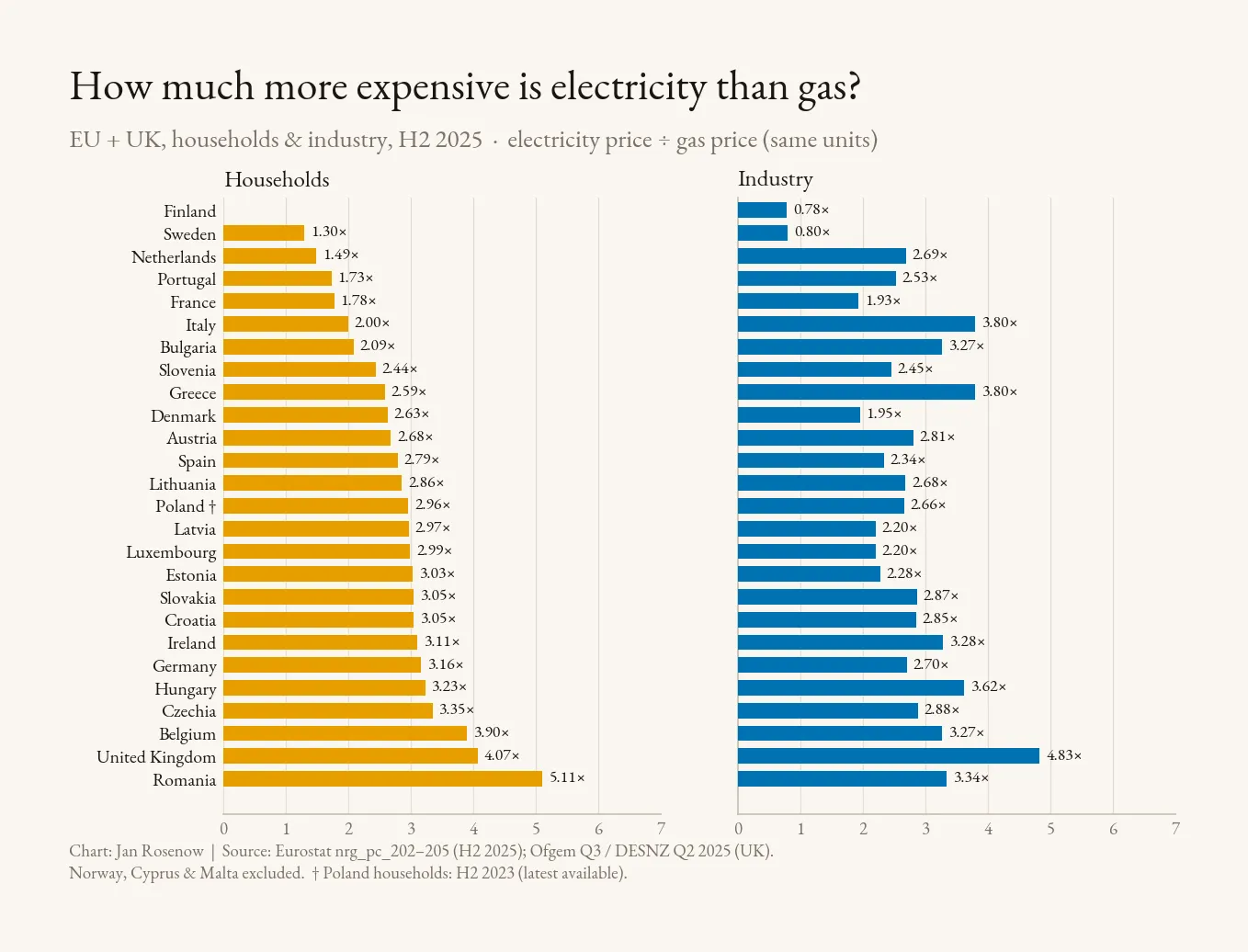
Lets start with the easy bit. How much more expensive than gas is electricity in markets such as the UK ? Professor Rosenow regularly produces a chart showing the ratio between electricity & gas prices gas for both households and industry. The data below is for 2H 2025. It shows that the UK has the second most expensive electricity (relatively), just behind Romania. It's c. 4.1x more expensive than gas (per unit of energy).
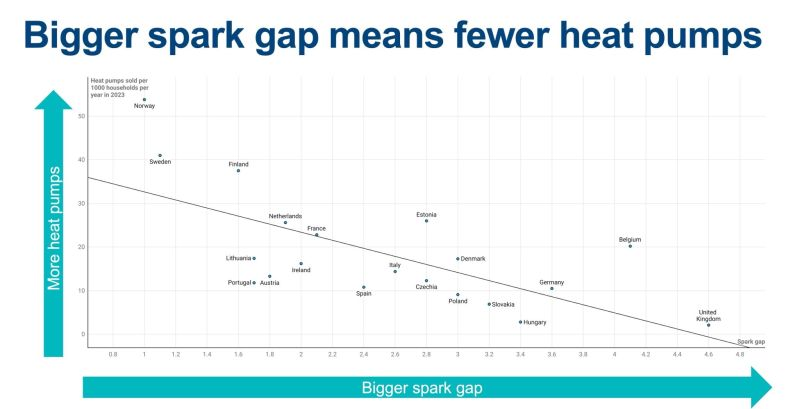
Why is this relevant for heat pumps? Put simply, the more expensive your electricity is than gas, the less cost competitive the switch to a heat pump will be. As the chart below shows, there are fewer heat pump installations in countries where the gap between electricity and gas prices (spark spread or gap) is the highest. You can see the UK way down at the bottom right of the chart.
One useful way of measuring this is what is called the Total Cost of Ownership (TCO). Research by Rosenow et al shows that in the UK an 'average' heat pump (SCOP of 2.9x) has a higher TCO than a gas boiler (running at 85% efficient) - these are the two left hand bars in the chart below.
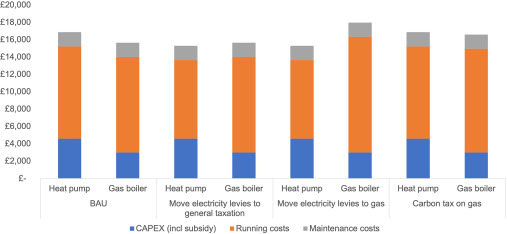
In other words, for many households, the math's does not (quite) stack up, even before you include other factors such as (a lack of) familiarity with the technology, perceived disruption, a dis-trust of installers, the requirement for internal and external space for the heat pump, and (where needed) a hot water tank.
And as the team from LivingPlaces point out in a recent blog, the best solution might be more than just a new heat pump. A full retrofit to a more sustainable heating system can involve a lot more work and expense.
"a full retrofit package for a typical pre-1980 semi-detached home (solar PV, battery, fabric insulation, heat pump) will likely cost around £31,500. After deducting the Boiler Upgrade Scheme contribution, the residual borrowing requirement is approximately £24,000. At a 4.5% mortgage rate over 25 years, the annual repayment obligation is roughly £1,600. The maximum annual energy bill saving from that same home is approximately £1,000. The household is £600 per year worse off, before any consideration of whether they are willing or able to take on debt in the first place."
 Living Places
One solution is obviously district heating. This involves the use of a centralised heating sources that delivers the heat to individual houses or flats via insulated pipes. The central nature of the process normally results in operational efficiencies. In June 2024, the European association Euroheat & Power identified 19,037 district heating systems across Europe, supplying heat to over 77.3 million people.
District heating is the most common heating solution in northern Europe. In Finland and Denmark it accounts for about 45% and 66% of heating demand respectively. In Eastern and Central Europe, the share of district heating ranges from about 40% in Poland and the Czech Republic, up to 45% in the Baltic countries. In 2022, 42.6% of European district heat was supplied from renewable and waste heat sources.
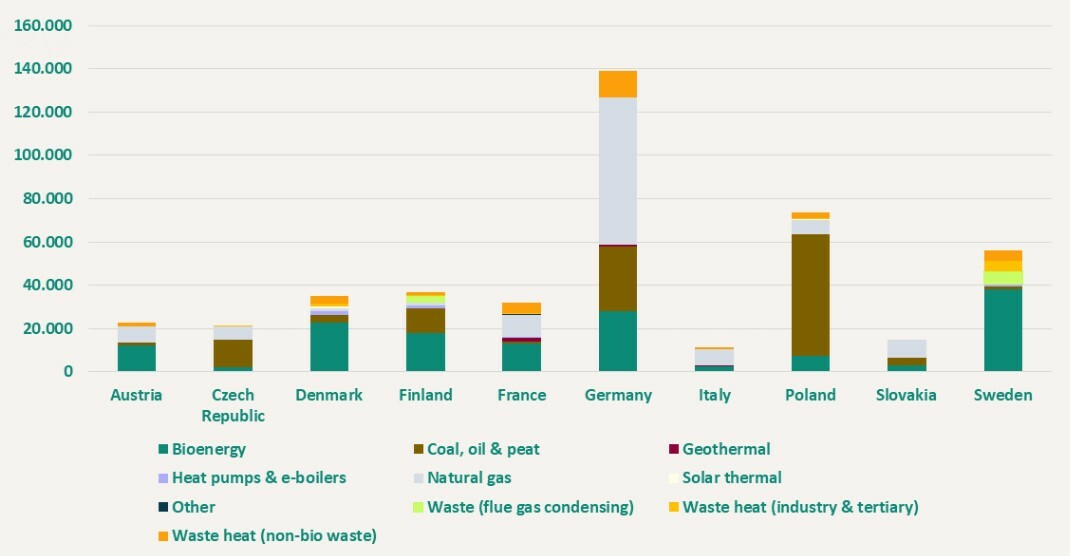
But district heating only works in some countries, and it's roll out into high electricity price markets such as the UK is likely to be restricted by high fixed costs (they need scale), and issues around having to use a single supplier. Plus of course there are environmental issues around the fuel source (which include biomass, coal, and gas as well as renewables and waste heat). So what to try if traditional approaches to promoting heat pumps do not work, and district heating is not realistic at scale?
Professor Rosenow et al have proposed a mixture of policy responses from shifting levies and taxes over to gas, through the use of general taxation, on to applying a carbon tax on gas. Any of these could work, but they rely on politicians making decision and sticking to it ...
 Steven Bowen
The LivingPlaces proposal by contrast is for a new business model - area based retrofits. It's important to be clear, this is not simply house-by-house delivery organised geographically. It is a different model of financing, delivery and community engagement that unlocks things individual household programmes cannot.
They describe it better than I can ...
When a funded neighbourhood programme arrives in a street, every property can participate regardless of tenure, income or ability to pay. The programme delivers solar PV, battery storage, fabric improvements, and heat pump installation across the whole area through a single contracted supply chain. This may be an aggregated set of individual household installations and/or it may involve the design of collective assets: community batteries, collective heat solutions, community energy installations.
Procurement at scale reduces per-unit costs materially; and their modelling suggests savings of 19% or more in mature programme delivery. And the big difference as against existing models (utility bills plus you pay for the infrastructure) is that households simply pay a single monthly bill that covers all of the system costs. Individual householders pay nothing upfront, the funding entity secures the finance (and collects any government grants), and owns and maintains the assets.
And this is not just a consultant's dream, it's an idea that is being developed in the West Midlands, Bristol, York/North Yorkshire & Greater Manchester (sorry if I missed your region out). Yes, there are issues, including regulatory clarity around consumer protections, and local land charge registrations (on the assets). But it definably feels like an idea that is worthy of follow up from investors, especially those who are looking at place based investing, and for projects with impact.
Sometimes when a problem seems to be politically intractable we need to explore new business models. I am not convinced that UK politicians, even from the centre/left, are ready to put more taxes on natural gas, or to go the final mile on the regulatory phase out of gas boilers. But maybe this process can get broader based political support ?
One last thought
One important driver of this process is the electricity price. And by electricity price we really mean the price to the consumer (retail or industrial), not the often quoted wholesale price. Jan Rosenow, a Professor at Oxford University, has done some interesting work on how this price is set, and how the retail price is often set by costs unrelated to the generation process, including who pays the network costs.
To quote his recent substack post ...
In many cases, the non-energy components of the electricity bill are responsible for unhelpfully large electricity to gas price ratios. In the second half of 2025, the average European household paid roughly 2.5 to 3 times more for a unit of electricity than for the same energy delivered as gas.
 Jan Rosenow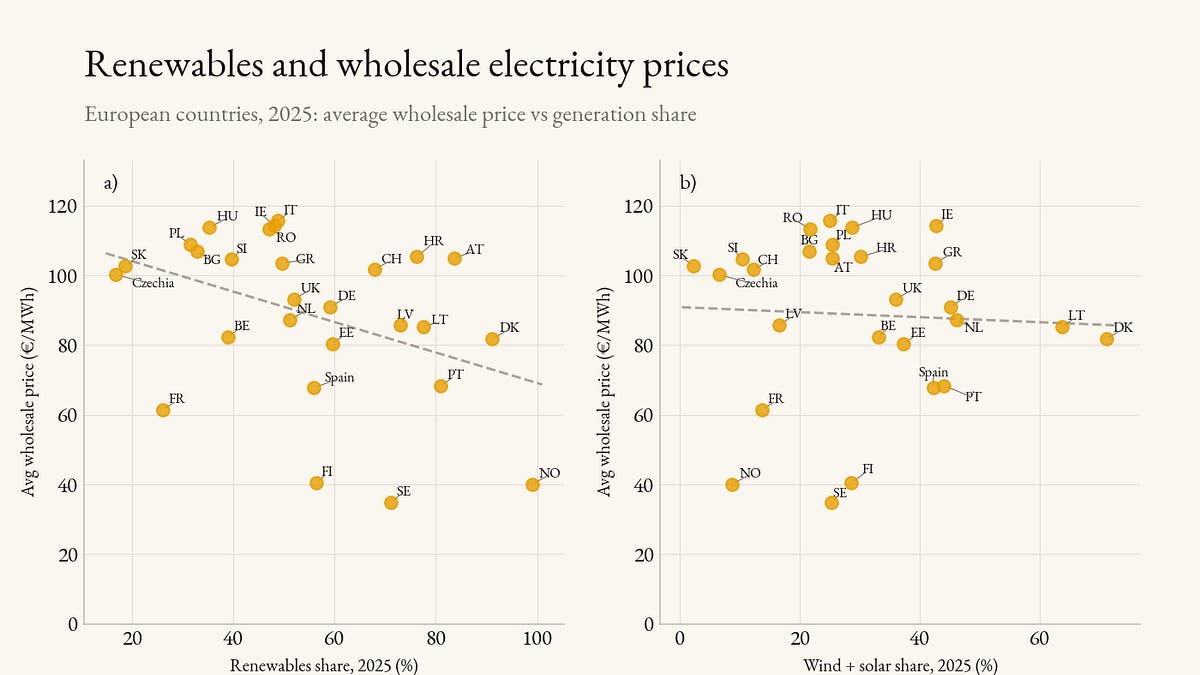
Grant me the strength to accept the things I cannot change, the courage to change the things I can, and the wisdom to know the difference. Reinhold Niebuhr - a Lutheran theologian in the early 1930's
Please read: important legal stuff. Note - this is not investment advice.