
Sunday Brunch: what you 'believe' is really important.
Our 'beliefs' frame both what information we collect on climate & sustainability challenges, and how we think about possible solutions. Sometimes these beliefs cause us to support solutions that don't work, and even worse, may never work.

A better name for these beliefs is narratives. These are the fundamental stories that come from our beliefs about how the world works. They also give us a framework for interpreting events and deciding on a course of action. Almost by definition, our narratives are simplifications of the world, enabling us to make decisions in complex environments.
The danger is that our narratives can blind us to the fact that the solutions we are supporting are actually not working. We think that if we just 'try harder' the outcome will change. And as a result we just keep going down the same blind alleys.
Investors do it, and so do Sustainability Professionals. If we want to make real progress we need to challenge our narratives, by testing them against real world outcomes and new facts. And we need to fine tune our actions, focusing on those efforts that actually make a difference.
Our narratives about how to drive sustainability related change are not something we think about very much. They sit in the background, and in a way they almost hide. They really don't want us to test and challenge them. And yet they are very important. They shape how we look at problems and how we evaluate solutions.
Before we start this blog, it's worth pausing to think about your sustainability narrative. If you think that companies should fund (pay for) and drive the transitions, and that the main barrier to this happening is a lack of data, engagement, and disclosure, then you are part of the large group of sustainability professionals and investors that use what is called the market led narrative.
So, how can this sustainability narrative get us into difficulties?
When it encourages us to support solutions that don't actually create or drive change. Or putting it another way, we can end up advocating and promoting solutions that just don't work. And we cannot shift course, without changing our fundamental beliefs about how the sustainability world should work.
The goods news is that by modifying our narrative, making it more aligned with the real work, we can make some changes actually happen.
Let's start right at the beginning. I think I am on safe ground with regular readers when I say that most of us start from the position that we need to address climate change. The science on this is pretty clear. A good article from the UK Royal Society sets out the arguments and the data pretty clearly. I deliberately picked a independent organisation as I know that for many government controlled bodies what they say on climate change has become political.


Nearly all of us also believe that the solution is to engineer a transition away from fossil fuels to renewables and electrification.
And this process also applies to all sorts of other sustainability challenges. Take biodiversity loss as another example. Here the solution is to shift the production of goods and services away from activities that damage the environment. Shifting toward more sustainable practices, such as regenerative farming.
You can see how the same problem and solution framework can apply to all sustainability challenges.
Project Drawdown has a good list of all of the possible actions we can take, everything from clean coal through to chocolate.
Lauren Gifford, Ph.D., Amanda Bielawski, Ph.D. and Elena Essa
But so far this framework is not really a narrative, it's more a definition of a problem that we need to solve. And a list of possible solutions.
The controversial parts of our narrative
Where it gets interesting, and more controversial, is when our narrative building moves onto the how & the who.
Starting with the who. The most common focus is on companies. This is partly because governments normally do not have enough money to make the required investments, and so the narrative focuses on companies being the funders of change.
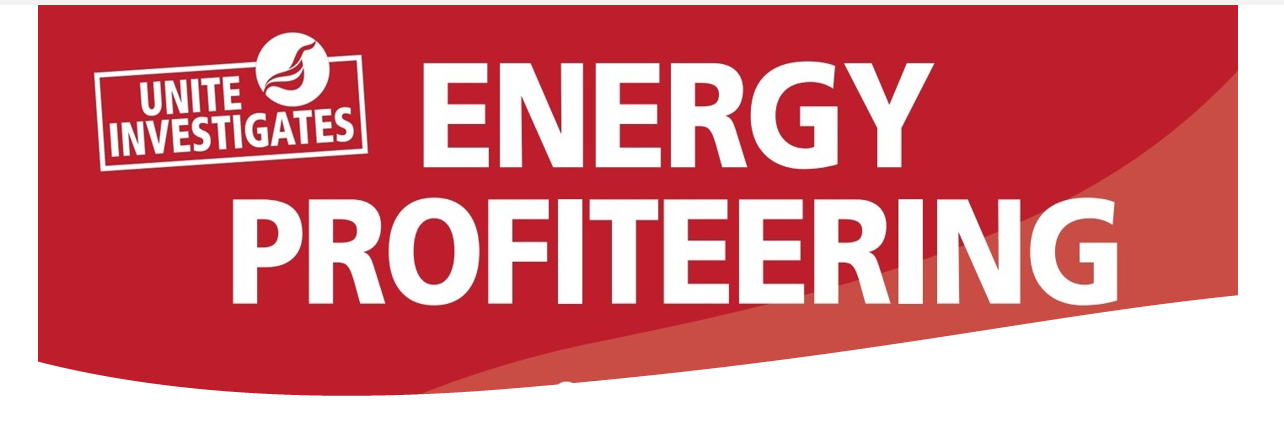
But there is also an element of cause and effect. Many people believe that as companies 'got us into this mess - making a lot of money in the process', then they should be the ones to pay to get us on a better and more sustainable path. An example of this is the recent report by the UK Unite Union on the energy companies, highlighting the scale of profits and foreign ownership.
Another good example is the O&G industry. It is a widely held view that as Oil & Gas (fossil fuel) companies got us into this mess, they should take the lead in fixing it.
Or as Harald Walkate puts it in his really well argued blog for illuminem ...
They (the O&G companies) are the winners in today’s energy sources and they should choose to be winners in tomorrow’s sources, and therefore switch to low-carbon technologies. As they change the type of energy supplied, the demand for these types of energy will then also adapt. Or, if they refuse, investors should starve these companies of capital – this will limit the supply of fossil fuels and force energy users to switch to renewables.
It's a great article that I highly recommend you read (all three parts), the link takes you to part 1.
Market led transition narrative has companies at the centre
As we said above, this is what is known as the market led transition narrative. We put companies and markets at the heart of the change effort.
The who (companies and markets) effectively defines the how. We want companies to undertake more detailed reporting and disclosures, we want better corporate engagement, and we want companies to prepare and execute detailed transition plans. And as investors we expect all of these factors to be reflected in investment risk.
It's worth noting that the how is not cost free. For instance, the FCA recently estimated that global spending on ESG data, including ratings, is projected to reach $2.2bn in 2025. And that excludes the costs of companies preparing the data (which can be material - just for the EU nature reporting standards the number is estimated to be over E23bn pa), and the work required by investors to digest the data and prepare for engagement.
This is broadly speaking the narrative that many sustainability groups follow (lobby companies for better disclosure and reporting, and lobby investors to better engage with companies), and the one that has had the most impact on recent regulation. For instance, while most of the recent EU environmental regulation has mandatory reporting, the focus is more on better disclosure rather than on mandating specific new behaviors.
 Jonathan Miles
And it's largely the narrative that most investors focus on. Climate change brings risks (and opportunities) that in turn will impose costs on companies. And the better we understand these risks, the better we can price the costs.
The most important test: is this working?
This is a difficult question to answer, after all how do you prove a counter factual, basically what would have happened if we had not put in place all of the reporting and disclosure requirements. It's hard to prove a negative.
But various researchers have given it a good try, and the evidence they have uncovered suggests that there is only very limited evidence that sustainable investing practices have delivered real company changes, that in turn have contributed to companies fixing system wide challenges (such as reducing GHG emissions or delivering progress toward the UN SDG's.)
Tom Gosling
Recent work from the LSE Grantham Research Institute shows that there is "little evidence that adopting a long-term net zero target leads to large or immediate emissions cuts, or to broad changes in climate governance". To be clear, they don't argue that long term net zero targets are worthless, just that they don't directly deliver the changes we were hoping they would.


Other research suggests that most investors are unwilling to sacrifice financial returns, even when they say that they support sustainability objectives. And so when it comes to a tradeoff, they choose financial returns.
The primary motivation is financial, even among sustainable funds, with few willing to sacrifice financial returns for Environmental and Social performance. Sustainable Investing in Practice: Objectives, Beliefs, and Limits to Impact (Edmans, Gosling & Jenter Feb 2026).
This doesn't sound good. After all a lot of people are working really hard (and spending a lot of money) on driving change. Efforts that are not really delivering the results we want. Does this mean that we need to totally rethink our narrative?
Maybe, but also maybe not. Yes, we need to put a greater emphasis on policy change, tilting toward what Harald Walkate calls the Policy led narrative.
But I argue we also need to modify the market led narrative. I have two main amendments.
First - companies will only act if it is profitable for them to do so. If they undertake loss making activities, even if they create a lot of societal benefit, new shareholders will buy up the shares and pivot the activities back to those that make a profit. This is not a value judgment, it's just a reflection of what I have seen happening in financial markets over the last 30 years or so.
This equally applies to stopping doing things that we don't like them doing, but are legal and make a profit. Like drilling for oil and gas.
To be clear, this definition of making a profit works over the long term. And so companies might willingly pivot away from activities that are profitable now, but that might not be in the future. And if they do not, then shareholders will be more willing to push them to change. Or at least explain how the business as usual plan will continue to work.
A good example of this is the recent BP AGM vote, which can be viewed as shareholders demanding that management explain how their current strategy (business as usual) will be value creating in the long run. As ACCR put it ...
This collective show of force puts the new BP leadership team on notice: the company must show its planned surge in upstream investment can deliver shareholder value.
Jillian Ambrose
Ok, so it's going to be hard to put companies and investors at the heart of the transition, if by doing so we are asking them to make a loss, or reduce their future profits. Under this adjusted market led narrative there is a corollary to this - it's about regulatory change (part of a policy led narrative).
So, second, all of this is predicated on the regulatory system staying as it is now. If we think there is a reasonable chance that regulation (including subsidies) will come in that will make a companies existing operations less profitable, or even loss making, then companies will be more willing to adapt.
A good example of this is the introduction of electric vehicles. In many parts of the world regulation, or the threat of ever tightening rules, is pushing automotive companies away from producing internal combustion engine cars. Shareholders are less and less willing to stay invested in companies that ignore the reality of a changing regulatory environment.

Overall, while I can see the weaknesses in the market led transition narrative, I believe that with a few tweaks, it can be made much more fit for purpose.
How does all of this fit with your underlying narrative of how sustainability change should happen? And have I convinced you that while the market led narrative can work in some circumstances, it needs a policy and regulatory angle if it is to be totally successful ? We can use the profit motive (carrot) in some circumstances, but in others we need to threat of the regulatory 'stick'.
One last thought
We often mix up what as a society we need, with what we can afford. This is not about blocking sustainability actions. It's about identifying who needs to do what to make something actually happen. And who pays.
Steven Bowen
Grant me the strength to accept the things I cannot change, the courage to change the things I can, and the wisdom to know the difference. Reinhold Niebuhr - a Lutheran theologian in the early 1930's
Please read: important legal stuff. Note - this is not investment advice.