Sunday Brunch: How long can companies sustain competitive advantage?
What a company is worth comes from how much financial value it creates, which mostly is driven by future investments. In financial speak the most important part of this is a companies competitive advantage period (CAP). Sustainability issues are an important driver of how long this will last.

The difference between a company being profitable for just a few years, and it's high profitability carrying on for decades, could turn out to be determined by how well it prepares for and anticipates sustainability related challenges.
When we talk to companies about sustainability, sometimes we can get lost in discussing policies or short term actions (as an investor I think about things that will happen by 2030 as short term). But, the biggest overlap between sustainability and financial value actually comes from a companies longer term strategy, and how it is being delivered.
Or putting it another way, how they are anticipating changes in the companies external environment that will take place 5 years or more out in the future.
In our company valuation we call this the terminal value of the company, basically how much of the value comes from the longer term future. And this is really important, in some cases making up 75% plus of the companies value.
Yes, you read that right. About 3/4 or more of a companies value comes from the longer term. This is why sustainability should be such a big issue for companies and investors.
Making companies more sustainable
If we are going to get companies to become more sustainable we either have to change the rules under which they operate (policy or legal) or we need to get them (and their investors) to think more about the future. And how that future might be impacted by sustainability challenges and opportunities.
My world is largely about the second driver, although understanding an investors perspective can also build better and more effective policy.
Sustainability issues (everything from climate adaptation through to social factors such as community and human capital) will alter a companies future. This is pretty much undeniable. And in that sense sustainability related change is no different from all the other changes (such as different consumer demands) that a company, it's management, and the board of directors have to prepare for.
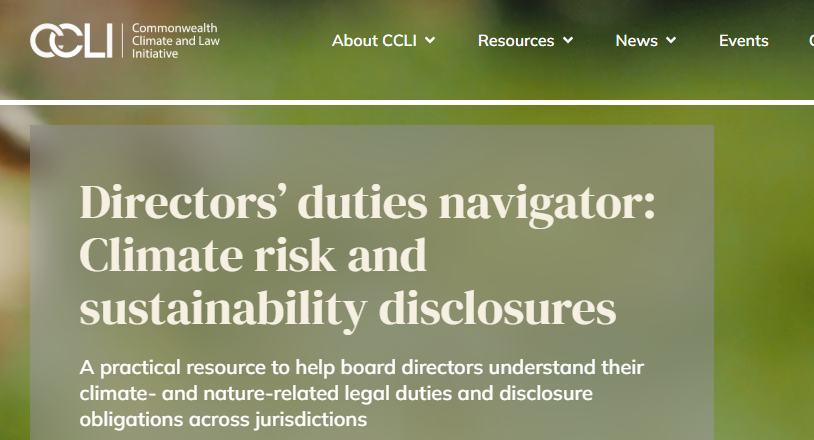
Plus, as the Commonwealth Climate and Law Initiative points out ... directors need to take climate & nature seriously, not just because it's right but because it's required (normally under law). Put simply, it's often part of their fiduciary duty. And this is because it has financial and other implications for the long term success of the company.
This financial impact could be for the better (adapting now to future changes and/or developing more sustainable products) or for the worse (thinking business as usual is a viable plan and then getting hit by an avalanche of higher costs and weaker sales).
But how much better (in a financial sense).
One really useful way of thinking about this for investors is what is known as a companies Competitive Advantage Period or CAP. This is the period over which the company can earn returns above it's the cost of capital on new investments.
The idea is in many ways really simple. Companies have a cost of investment, generally measured by their Weighted Average Cost of Capital (WACC) . You don't need to understand the maths in detail to apply this, you can just look it up. But if you do - this is a decent explanation.
 Tim Vipond, FMVA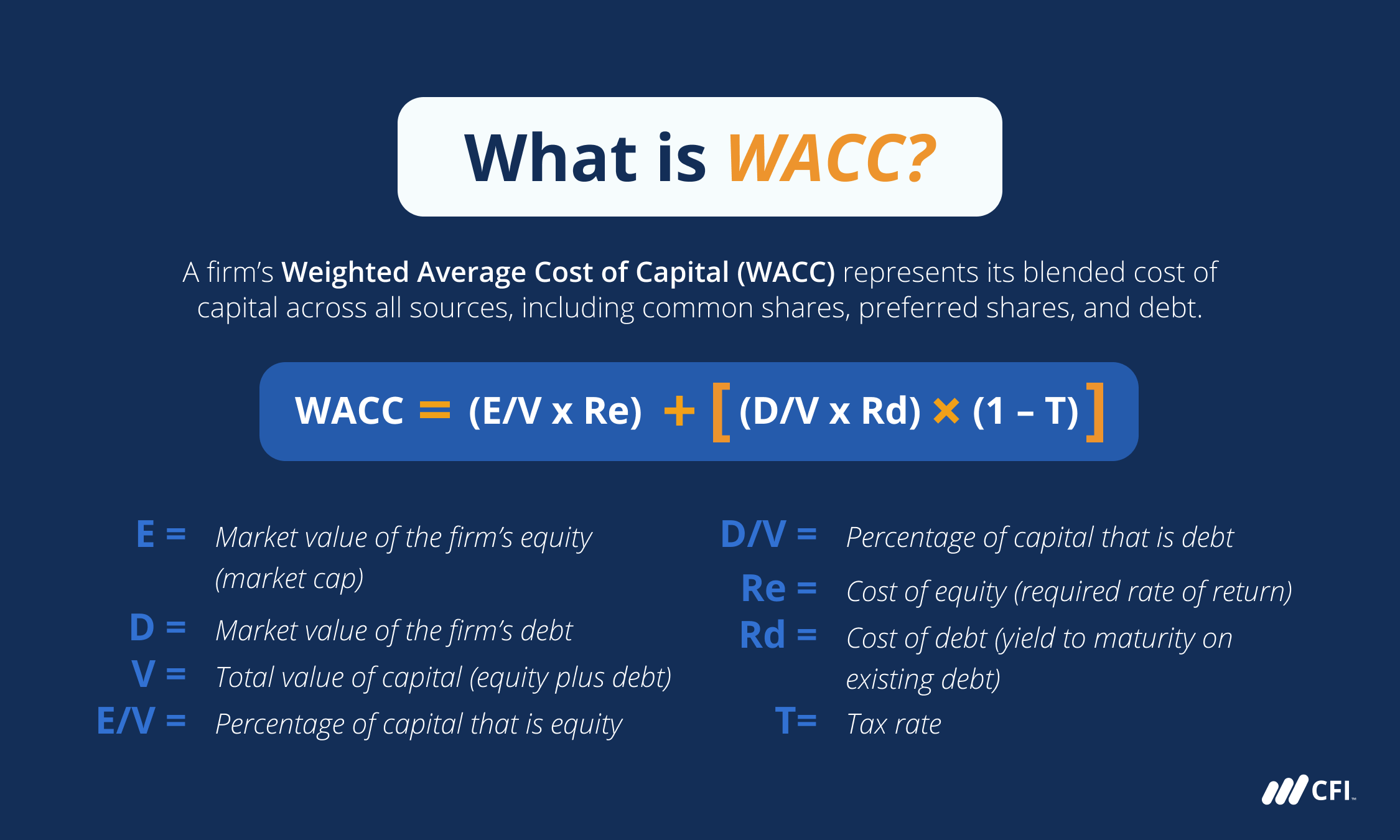
All you really need to know for now is that this is the cost that the company incurs when it invests. A good investment is one that gives a return higher than the WACC. And a bad one (a value destroying one) has a return that is lower than the WACC.
I want to park for now costs that they company imposes on society and that they can dodge, it's a subject of another blog. Although this book is worth a read if you want to start exploring some of the issues involved.
 Hello
Hello
Ok - so lets pretend that you have found an investment that has a financial return that is above the companies WACC. What else do you need to know before you can decide what it is worth?
A really important part of the answer is working out how long the Competitive Advantage Period (CAP) will last. Because no investment can be value creating for ever. A companies competitive advantage gradually gets eroded (unless they can keep on innovating). And it turns out that this fact is not just important for investors, it's also important for sustainability professionals.
Why? Because the length of the CAP depends on what happens in the future. And a big part of that will be how markets and societies respond to environmental and social challenges.
Let's take an easy example. Your investment is related to the manufacture of Internal Combustion Engine (ICE) cars. It might currently look like it gives you a good return ... but how long will this continue? Part of this answer is about how quickly the markets switch to Electric Vehicles (EV's), and which market segments might survive for longer.
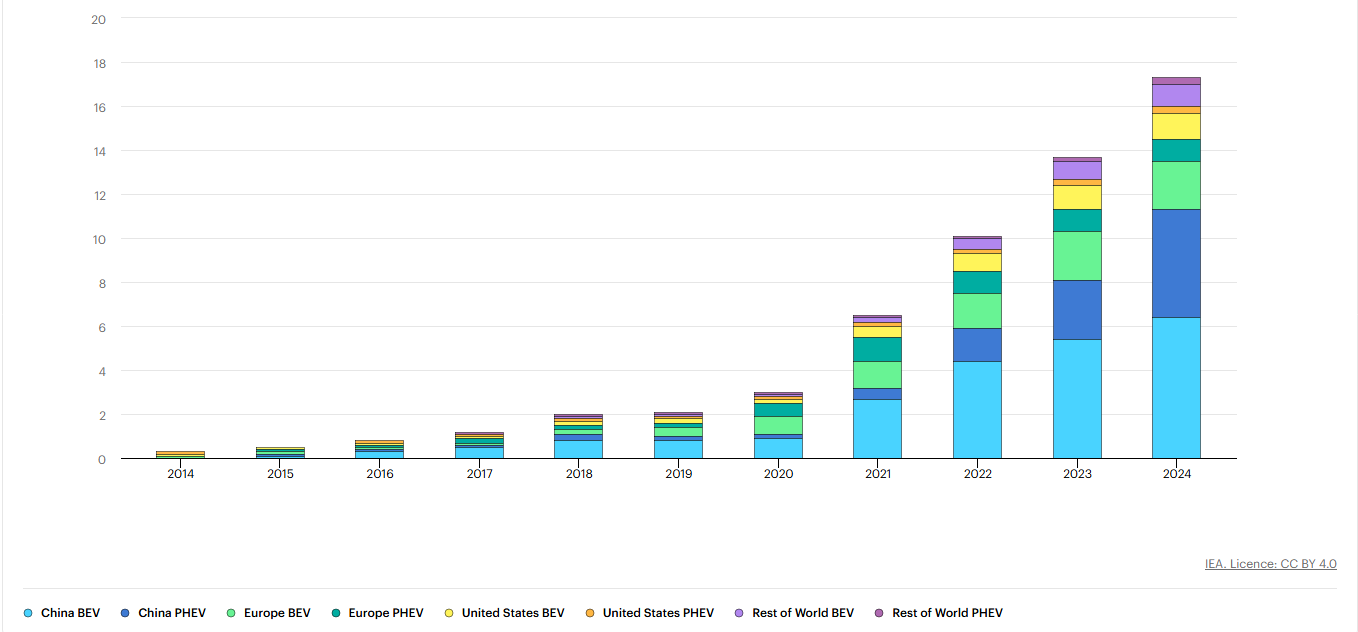
How is this going so far? According to the Institute for Energy Research global EV sales in 2025 grew by 20% to just under 21m vehicles. This puts the market share at over 20%. And it's continuing to grow.
According to the IEA "at the end of 2024, the electric car fleet had reached almost 58 million, about 4% of the total passenger car fleet and more than triple the total electric car fleet in 2021."
Now it's possible that your investment will dodge the growth of EV's. We know that while markets are really competitive, and hence it's hard to maintain competitive advantage for long, some companies produce high returns, well above their WACC, for sustained periods, often decades. Your investment could turn out to be one of these, but it's unlikely.
Hopefully now you can see how sustainability issues will impact the length of most companies Competitive Advantage Period. This is true for companies in sectors as diverse as industrials, food supply, buildings/real estate and transport. They will all be impacted, often in very different ways, by sustainability issues. Preparing now is not only a sensible thing to do, it also normally makes good financial sense. Assuming business as usual is not a good plan.
We have only really just scratched the surface of how you can think about a companies Competitive Advantage Period and how sustainability issues could shorten or lengthen it - depending on how the company acts. As investors, getting a company (and it's board) to think more deeply about sustainability issues could be the most value creating action we could take.
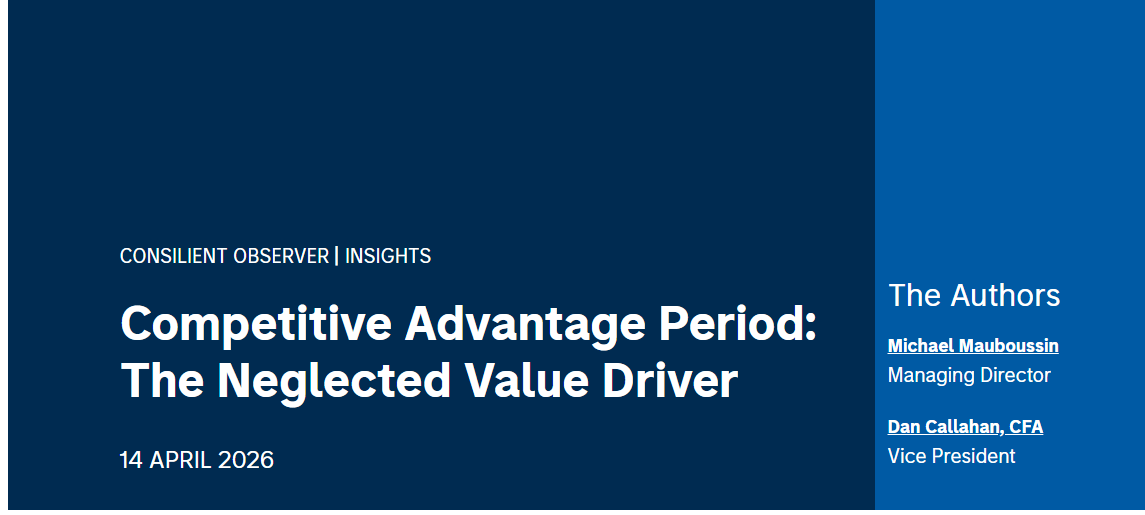
If you want to read some more this is a really good paper ... Competitive Advantage Period: The Neglected Value Driver by Mauboussin & Callahan.
One last thought
Sometimes it's changing consumer demand patterns we need to watch, which can slowly alter what it is we eat. We know that ruminants (mostly cows) are responsible for a big chunk of our methane emissions. As investors, who should we expect to act to reduce this, and how? And if it's not companies, should they still prepare for a lower meat/dairy future?
Steven Bowen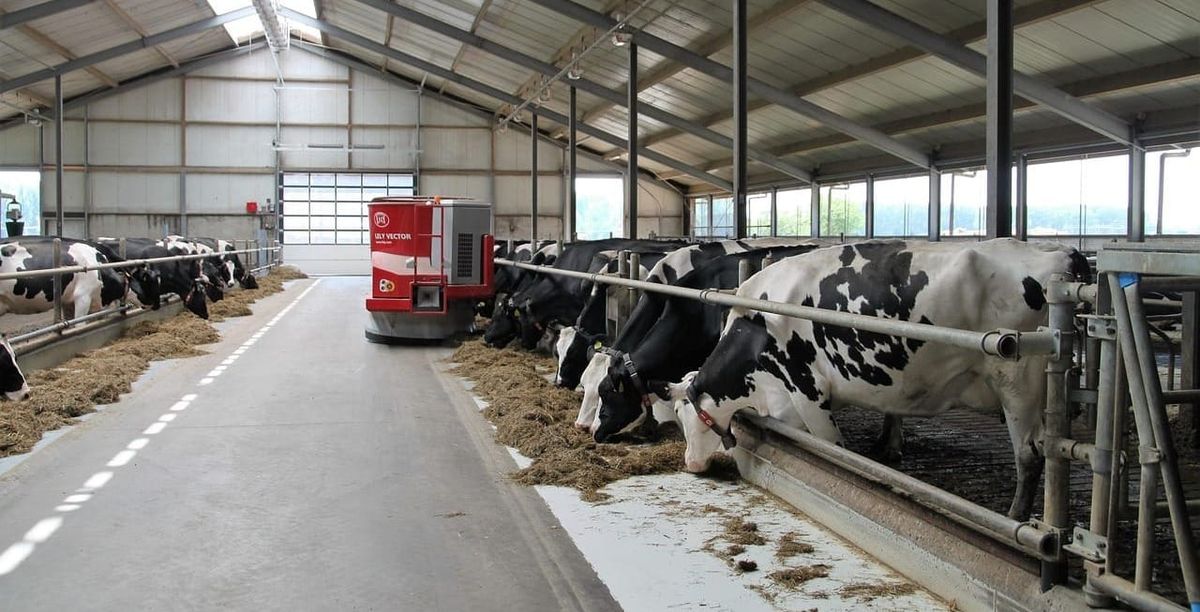
Grant me the strength to accept the things I cannot change, the courage to change the things I can, and the wisdom to know the difference. Reinhold Niebuhr - a Lutheran theologian in the early 1930's
Please read: important legal stuff. Note - this is not investment advice.