Sunday Brunch: Green electricity needs better networks
Growing electricity demand is adding to the pressure on our grids. Grid limitations are one of the biggest barriers to rolling out green electricity at scale. But this is a solvable challenge - we have the technology already. And there is a lot that investors can do to make this happen faster.

This blog is largely about the investment opportunities in upgrading the US electricity grid, but the principles also apply pretty much everywhere else. The reason why it's about the US is that the outputs of the recent Columbia Business School Climate Knowledge Initiative (CKI) workshop on Power Grids have recently been published.
For investors they make for interesting reading. The good news is that the opportunities for investment are massive. The bad news is that in some areas we still need politicians and regulators to act. As the summary of the workshop states....
The harder problem is designing markets, incentives, and institutions that can actually monetize and put that tech to work, and getting the relevant stakeholders (utilities, regulators, developers, and investors, who each hold a different piece of the puzzle) to align.
This is the latest blog on those sustainability issues that investors and companies can act on. It's become fashionable to assume that only policy change can drive sustainability forward. And while this is partly true, there are still solutions where the long term investment economics are such that we can make a difference (and make a fair investment return).
Lets start with the good news. The report estimates that 'just' modernising the existing US grid system will require investment of between $200 billion to $400 billion a year globally between 2030 and 2035. And longer term grid expansion could add an estimated $200 billion or more annually (again from 2030 to 2035). And yes, that is every year.
And according to the report, global grid investment is expected to rise to c.US$600 bn by 2030 (editors note - the math's here don't seem to quite match but they are the experts - when we look at the global opportunity we will dig a bit deeper into this).
For the mid term spending (2040 -2050) only 20% of investment will be on grid expansion, which is politically difficult to execute. The vast majority will be on the simpler to action grid modernisation.
Given that this is very much a demand driven challenge (customers want the electricity, the hard bit is supplying it), many of the investments should be attractive to investors. Especially those with a long term perspective.
Why do we need to improve our electricity grid?
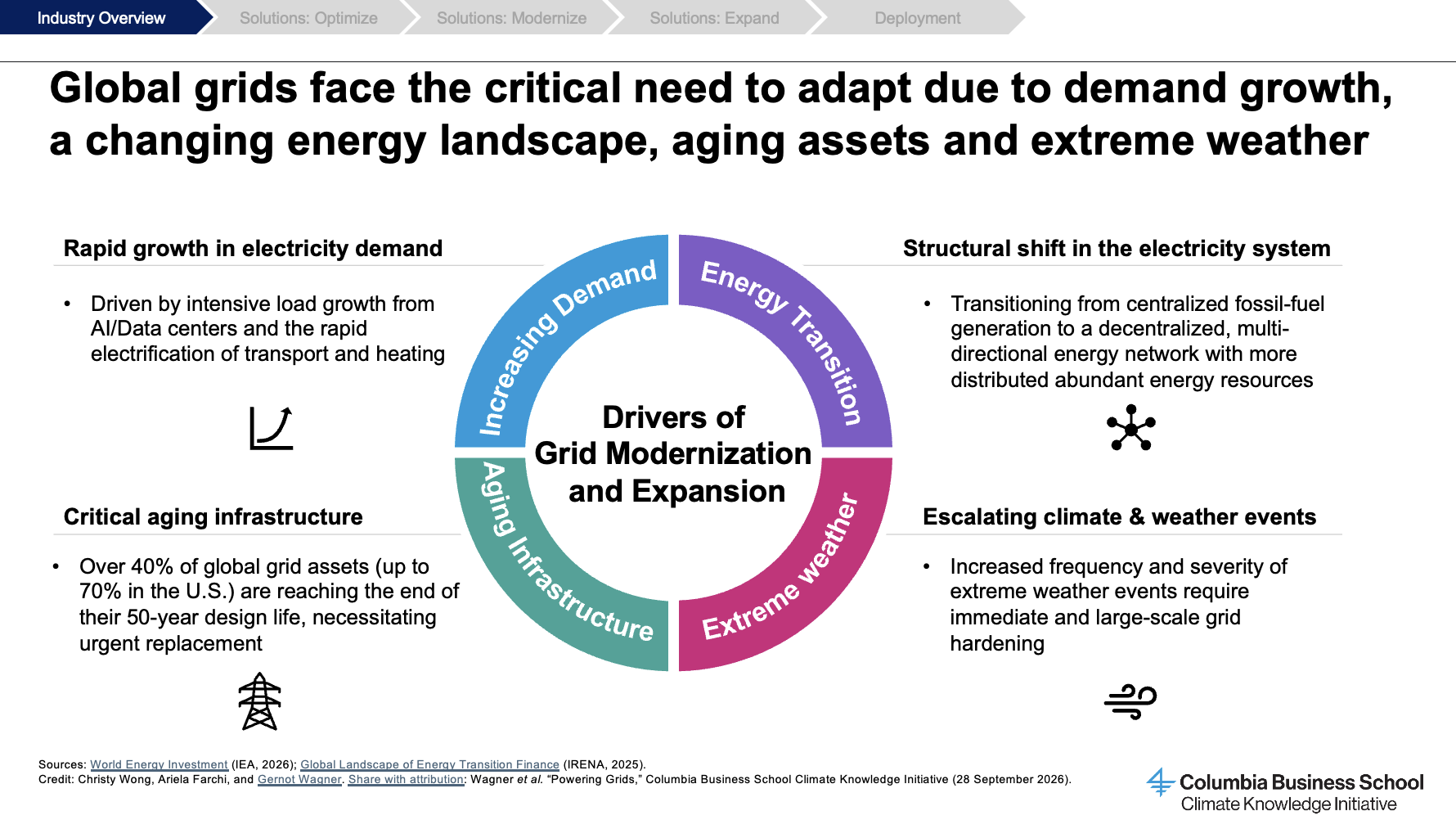
The report highlights four structural challenges that are hitting electricity grids. Growing demand (potentially doubling by 2050), aging infrastructure that needs modernising, the shift to renewables (= more distributed and more variable), and increasing weather impacts. Just as an aside, electricity must be one of the few industries that sees increasing demand as a problem, most firms would love to see steadily growing demand for their product or service.
So what can we do to modernise the grid?
There are broadly three investment levers we need to 'pull'. Optimise what we already have, invest in the hardware that will make the grid more resilient, and grow (expand) the grid. As the workshop agreed - we need all of the above. None of the solutions on their own will fix the problem.
For this blog I want to focus (again) on the optimise and modernise levers. Expanding the grid is really important, and a material component of the investment need. But, from an investor perspective, it's also way harder. As an example - energycentral is reporting that MISO & SPP's efforts to build inter-regional transmission connections has fizzled out (again).

Before we cover the Columbia event, we wrote back in May 2023 about the technologies available - you can read about the state of play then for software developments here, and for the hardware here. I find the software actions particularly interesting, in part because they are easier to implement and give relatively quick payback.
 Steven Bowen
And what can we do 'quickly'?
By quickly, we mean over the next 1-4 years. It turns out we can do a lot. The table below is from the detailed event report, the near term actionable solutions are in the left two lists - in the row headed Highlighted Solutions. Most of them will be familiar to regular readers, we set out some of them in the 2023 blogs (above).
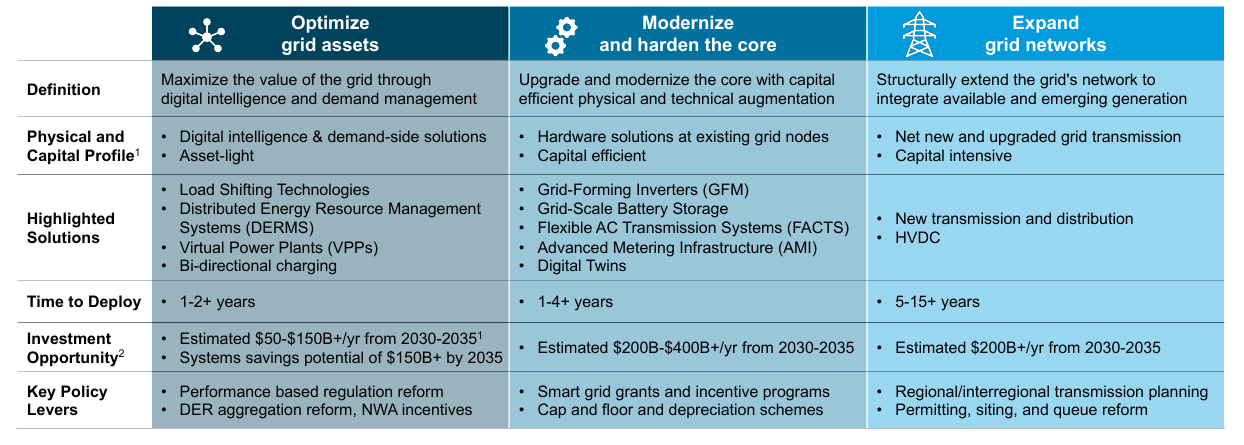
Something that hits you when you read the list of actions is that the technology is mostly already proven. And in many cases the financial viability is as well. Yes, we need regulatory reimbursement structures that allow the more innovative solutions, but the solutions are not complex. We just need to roll them out.
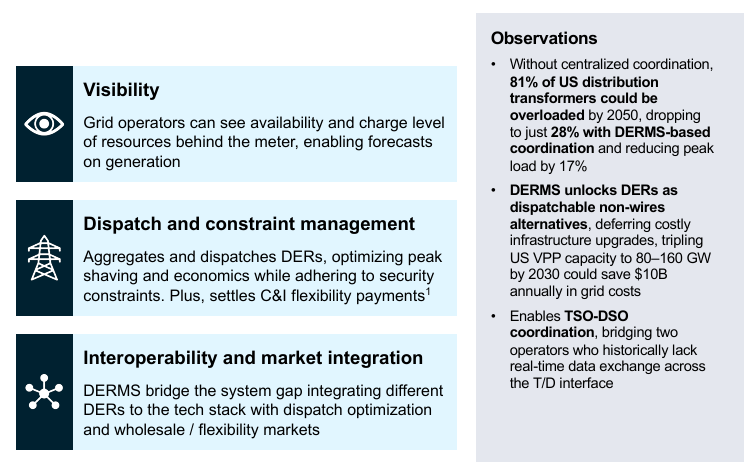
For today I want to pick just one solution - Distributed Energy Resource Management Systems or DREMS. The idea is simple. DERMS are software solutions that control and coordinate various distributed energy resources.
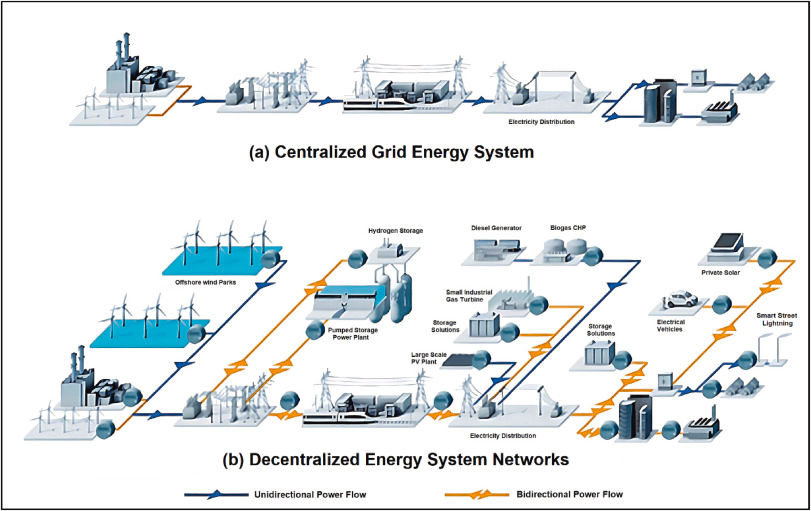
How do they work? We first co-ordinate the millions of small electricity system assets scattered around the region such as rooftop solar, smart meters, storage batteries, EVs and thermostats. Each asset automatically reports its output, state of charge and availability back up to the DREMS platform. This in turn forecasts load, solar and wind output, prices and grid constraints. And then it optimises the response of the system, with each asset being paid for the contribution they make.
DREMS can unlock the flexibility potential in our distributed electricity systems. This in turn allows us to get more out of our existing infrastructure, deferring capex, improving reliability, and enabling us to better integrate renewables.
And because it's a software led solution , they are faster to deploy, with the Columbia report suggesting a led time of only 1-2 years. And they can have a relatively rapid payback. As the conference report highlights "tripling US VPP capacity to 80–160 GW by 2030 could save $10B annually in grid costs".
Yes, on their own they are not the total solution, but they get us moving in the right direction and they could buy us time to get more politically complex solutions up and running.
One last thought
Engaging on upgrading our electricity systems is where we can create real impact. Dr Ellen Quigley argues investors can make the 'most' difference in our efforts to reduce GHG emissions by focusing on the utility sector. This was one of the many really interesting points to emerge from a recent interview she gave with with Tom Gosling - it's well worth watching.
You can see Dr Quigley's point. While our electricity generation is getting cleaner, and globally clean energy investment is rising fast (now at US$2.2 trillion compared with 'only' US$1 trillion on fossil fuels), there is much more that can be done. And the companies that are able to make these decisions are largely the electricity utilities. Yes, we know that we also need action by politicians and regulators, but companies can make a real difference. As Dr Quiley argues, investors need to push them to go greener faster.
 Steven Bowen
Grant me the strength to accept the things I cannot change, the courage to change the things I can, and the wisdom to know the difference. Reinhold Niebuhr - a Lutheran theologian in the early 1930's
Please read: important legal stuff. Note - this is not investment advice.