Sunday Brunch: Using less concrete by design
While decarbonising cement (and hence concrete) production should be our ultimate aim, in the meantime we can help by using less new concrete. Part of this will be from using other materials such as engineered timber, but we can also use less of it, while still achieving our design aims .

From an investor viewpoint, it's important that we don't 'overfocus' on technological solutions to the concrete/cement challenge. Yes, they are really important. And in the longer term they will be the measures that will make the difference between success and failure. But we should also not lose sight of the fact that there are many other actions we can take that make a real difference in the short and medium term. As investors these are actions we want the companies we are invested in to start taking now - there is no need to wait.
And less concrete also requires less aggregate and less water.
To quote the 2022 movie - (in this case) Everything, Everywhere, All at once
Let's start with the scale of the challenge we face in decarbonising cement and concrete production. If you want to understand how cement is made (and hence why it's so hard to decarbonise), you might want to start with our May 2023 blog.
 Steven Bowen
First, the good news. The cement industry is aware of the need for action.
"Accounting for approximately 7% of the world’s carbon emissions, the global cement and concrete sector collectively committed to reaching net zero by 2050, as set out in the 2050 Net Zero roadmap." Global Cement and Concrete Association.


The recent Cement & Concrete Industry Net Zero Action & Progress Report 2025/26 highlighted both the progress to date, and the measures that the industry proposes to use to deliver the 2050 targets.
The main levers they discussed in the report are an increased use of supplementary (ie non Portland cement) materials; the introduction and/or expansion of carbon pricing; an increase in the use of carbon capture, use, and storage; a greater use of waste heat (as a replacement for fossil fuels); and action on the demand side to encourage low carbon procurement.
The extent to which many of these levers require material political action serve as a indicator to investors just how much needs to change if the 2050 net zero target is to be achieved.
To reinforce this point a recent (July 2025) article in Nature set out the scale of the challenge faced.
 Sayee Srikarah Volaity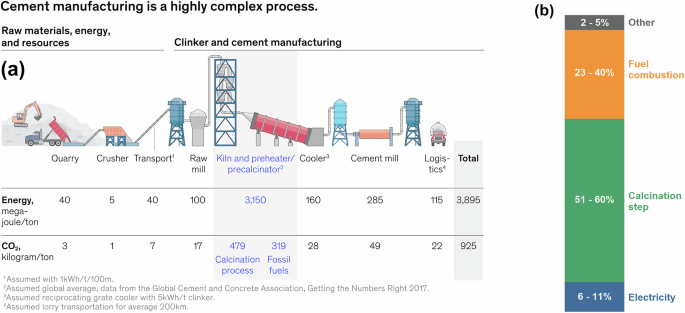
"While traditional approaches have relied heavily on incremental improvements, it is increasingly clear that radical innovation is necessary to address the dual challenges of carbon emissions and energy intensity in cement manufacturing. High-risk, high-reward pathways—such as electrochemical synthesis of cement precursors, novel carbon-efficient raw materials, and CCUS—are emerging as promising alternatives, yet their success hinges critically on electrification technologies powered by renewable energy sources."
However, each of these solutions faces material challenges including potentially prohibitive capital costs. This is not to say that we should not keep trying. The potential gains are such that it's a prize worth striving for.
But, as an investor, it feels unwise to only focus on the longer term technologically driven solutions. As an ex civil engineer turned investor, I would argue that we should also be looking at ways of using less concrete, as this can give us some really useful short term wins. These actions can also be remarkably cost effective. And as investors we often have the necessary levers, via our financial investments in the companies who procure and own the buildings.
One obvious angle is to re-use existing concrete beams and columns - something we could call circular concrete. After all every tonne of old concrete we re-use means we don't have to produce new Portland cement.
 Sarah DeWeerdt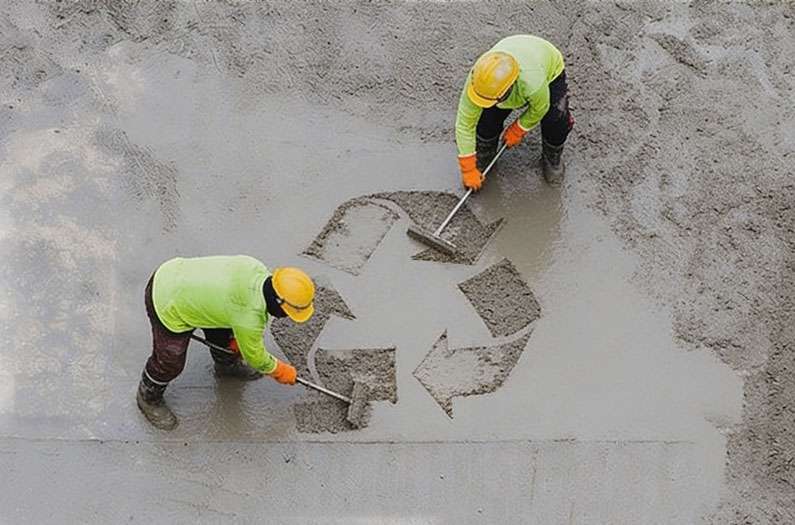
Another is to use structural timber (including what are known as glulam - 'glued & laminated' beams). This is not a universal replacement for reinforced concrete, but the list of practical applications is growing almost daily.
 Steven Bowen
And then we have design codes and practices. This might sound really boring, but as an ex engineer, the design codes often end up effectively stipulating what materials can be used where. And design practice does something similar - but we don't have to keep on doing the same things over and over again.
Take the clear span within a building. Will Arnold (ex of the Institution of Structural Engineers) highlighted in a recent LinkedIn post (if you care about our built environment and don't follow Will - you should) that a 9m span uses nearly 30% more concrete than a 6m span. And hence generates 30% more GHG emissions.
What does this mean in practice? Clear span buildings are structures designed without internal columns, providing unobstructed interior spaces ideal for various applications such as warehouses, sports facilities, and event venues. And yes, in some cases these long clear spans are essential. In many cases the client wants wide open spaces, it's more dramatic and creates impact.
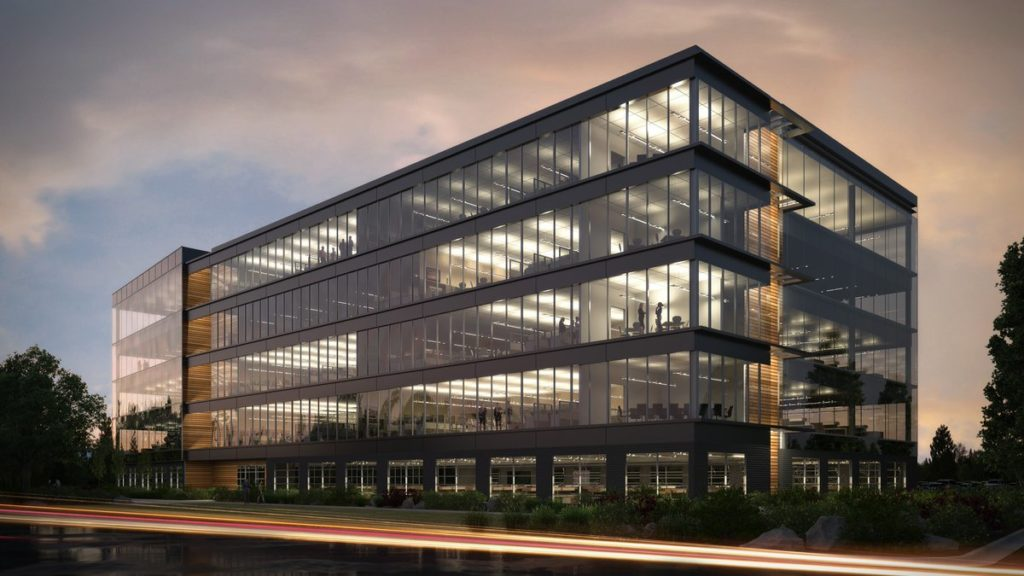
But not all buildings need long spans. Think about your office building, would it really be any worse if the clear spans were shorter? As the client or tenant would you accept slightly shorter clear spans if it meant 20% or even 30% less concrete was used?
One last thought
Getting involved in updating building codes and best practice might seem technical and a bit boring. But, it's probably the best and most efficient, at scale solution to creating a more sustainable building industry.
 Steven Bowen
Grant me the strength to accept the things I cannot change, the courage to change the things I can, and the wisdom to know the difference. Reinhold Niebuhr - a Lutheran theologian in the early 1930's
Please read: important legal stuff. Note - this is not investment advice.