Wednesday Brunch: who pays for resilience ?
Improved resilience is often quoted as a potential motivation for companies to invest in sustainability. While this is broadly correct, we also need to recognise that investing in resilience is a bit like paying for insurance. You may never end up using it, but you still incur the cost.

From an investor perspective we want the companies we are invested in to be more resilient - to be able to respond to (or even better anticipate) future changes. We all know the story of Nokia, and the famous 'burning platform' memo. We really do not want companies to get to the point where they face their own burning platform moment before they act. It's far better to anticipate change and prepare for it.
And the good news is that in some cases making the company more resilient can also benefit our wider society. A more resilient company can help society adapt to (and sometimes even mitigate) climate change, reduce harm to the environment, and improve the lives of its stakeholders.
But, we also need to be aware that resilience has a cost. Yes, it can have long term benefits, but many of the costs are upfront. And for companies operating in highly competitive industries, the resilience investment can result in short (and even mid) term financial underperformance when compared with its peer group.
Plus of course, it's possible that the future scenario the company prepares for doesn't happen. In which case many investors can think that the resilience investment was wasted.
Why we should encourage companies to invest in resilience
Regular readers will know that we view resilience as a positive attribute found in many good companies. Preparing for the future is a good investment. Yes, it might reduce cashflow available to investors now. But this is can be a good thing if it either contributes to higher future profits, or if it reduces future risks.
It's important to recognise that from a financial perspective, the two cases (investing for future growth and investing to avoid future risks) are very different.
Let's start with the easier one - investing for future growth. Good examples of this are healthier food, electrified transport, and more sustainable buildings. We know the future demand is coming, it's just a question of how far ahead do we anticipate it. Do we start now, or do we wait until the trend is obvious. By which stage everyone else can see the opportunity as well.
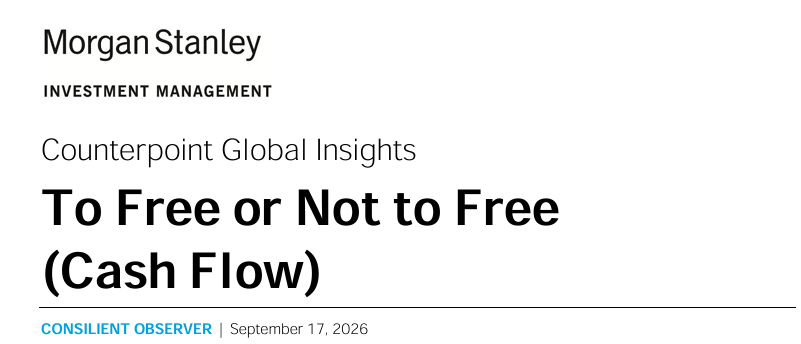
Michael Mauboussin (with Dan Callahan), recently wrote about this, using Walmart as an example. As they pointed out, Walmart had negative free cash flow (they spent more than they earned) for 14 years, from 1973 to 1986. But, that didn't matter from an investor perspective, as the company was able to use these investments to deliver an average Return On Invested Capital (ROIC) of 18%.
As they point out ...
"Walmart created value by investing more than it earned. That paid off, as the stock produced an annual total shareholder return of 33% during that period, three times that of the S&P 500 index. "
The Walmart example is clearly about investing for future profits. And as we knew the outcome, it wasn't too hard to link the three events. Historic investment resulted in future profits and higher share prices.
For many of our real world examples the link is less obvious. This doesn't mean that the investment hasn't paid off, it's just harder to separate out the specific impact.
How does this work in sustainability?
Taking a sustainability example - we can explore the link between healthier food, profits and share prices. This is a variant of the Walmart case - investing to drive future growth.
Tesco (the leading UK supermarket chain) has been working to (in their own words from their 2026 Sustainability report) "make healthier, more sustainable food choices affordable, accessible, simple, and convenient." Reported measures include making more of their food sales 'healthy', pushing growth in fresh fruit and vegetables, and reducing the use of ultra processed ingredients. Plus, they have become an anchor investor in the Bramble Fund, set up by the Leon co-founder Harry Dimbleby. Bramble looks to invest in companies capable of making food healthier, more sustainable, and more affordable.
Given that these investments should align well with growing consumer demand for healthier food, this should be positive for Tesco's market share and sales growth. In turn this normally leads to higher profits, as for food retailers/supermarkets there is normally a direct link between market share increases/lfl sales growth and profits.
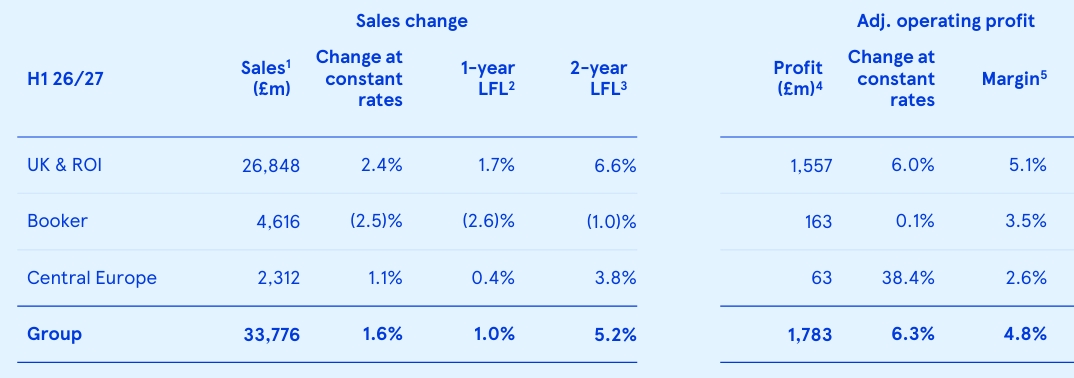
How has this shift played out? Starting with market share, the company recently reported an improvement in market share (as measured by Worldpanel) of 113bps over the last 4 years. They currently hold a UK market share of 27.8%, making them the countries largest supermarket company.
And their lfl sales growth (2 years) is strong at 6.6%, with a UK & ROI operating margin of 5.1%. Both of these are decent for a food retailer.
And finally share price change. Although the trend is not linear, the share price rise when compared with the FTSE 100 index is also encouraging.
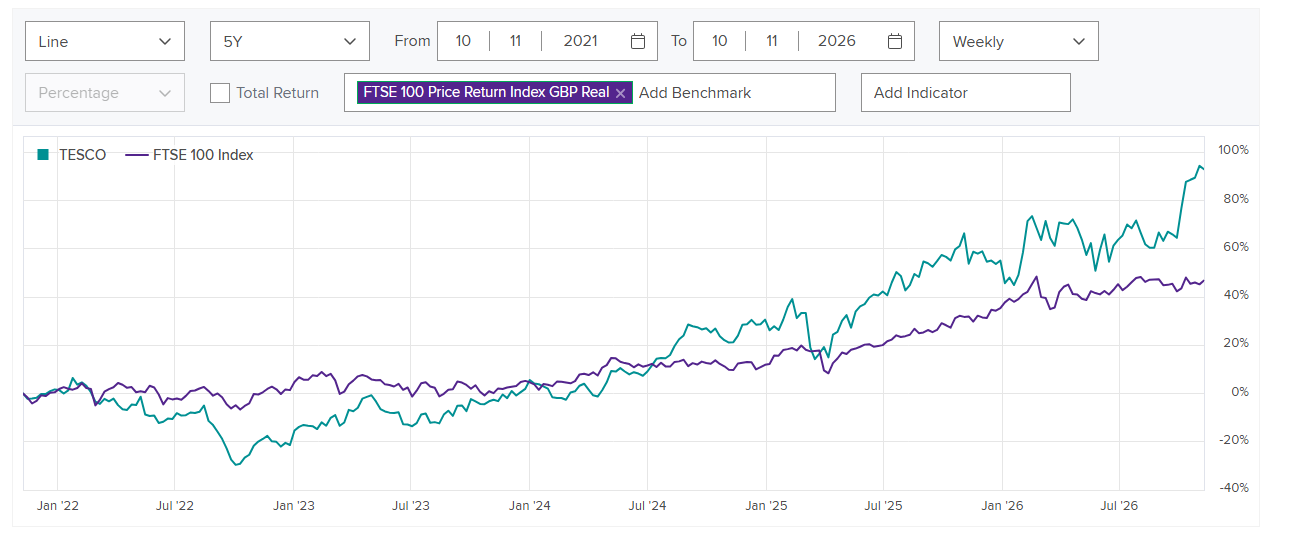
Of course, not all (or possibly even most) of this improvement can be attributed to the drive to healthier food. We cannot prove causation. Once we start looking at specific actions by a company, it's tough to directly link them to improved profits at a company level - just too many variables. But we can sensibly argue that the contribution was real and positive.
But - what about investing to reduce risk?
The cases that are more complex, and often more relevant for sustainability professionals, are those where the company invests to reduce future risks. And here it gets even more challenging to show a link to future profits.
Sadly, this is where most resilience investment sits - investing now to reduce uncertain future risks. We say uncertain because we cannot be sure when they will hit, at what scale, and how the company might have been impacted. And to be brutally honest it's really hard to 'prove' what the cost to the company of doing nothing would have been.
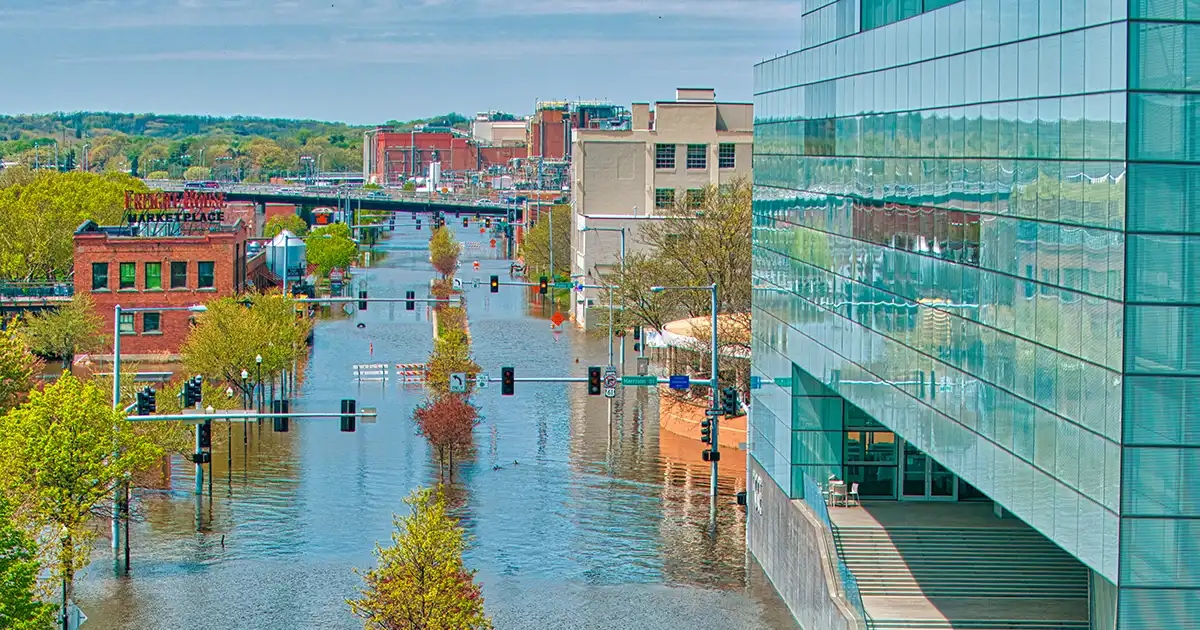
A good food example (staying with Tesco) is acting to reduce the risks that climate change (water scarcity, heat stress, floods etc) could have on the availability and price of fruit, vegetables and dairy.
The UK , Tesco's main market, relies on food imports from countries with high water stress. This includes a large amount of fruit and vegetables from Spain and Morocco where water stress levels are already at around 40 to 50%. To give this context, in 2023, Spain supplied 84% of total imports of lettuce, 37% of lemons and limes, 33% of oranges, and 30% of total fresh or chilled vegetables.
 Steven Bowen

Plus we know that UK dairy will face material risks in the future from heat stress, which reduces yields.
One 'obvious' solution is to invest in alternative supply sources - shifting sourcing to countries with lower water or heat stress risk. But when should food companies start this transition, and how quickly should they move? The shift is clearly going to impose a cost, but unfortunately the timing and scale of the climate impacts is harder to forecast.
We face similar questions in coffee, cocoa/chocolate, wine, and many other food products, including bananas.
 Steven Bowen

I would argue that the right answer is not to do nothing, business as usual is not a sensible (financial) option. We need to start now. But I accept that the question on the speed of change is not an easy one to answer. It's a topic I want to come back to, as the risk are already becoming very real.
One last thought
Spending on resilience does not always show a positive accounting outcome, even if it enables the company to successfully dodge the risk when it arrives.
To quote Patrick Schmucki ...
"A borrower who spends on flood defences takes on debt, worsens its leverage ratios, and receives a lower credit score for becoming a safer counterparty. Accounting standards see what resilience costs and stay silent on what it is worth."
He was talking about how banks and credit models work, but the point applies more widely. This is discussed and explored in a recent paper "Bridging the Climate Risk Disconnect" from DA Carlin and the Environmental Defence Fund.

Grant me the strength to accept the things I cannot change, the courage to change the things I can, and the wisdom to know the difference. Reinhold Niebuhr - a Lutheran theologian in the early 1930's
Please read: important legal stuff. Note - this is not investment advice.