Sunday Brunch: reducing cement use is more possible than you ....
Cement production (required for concrete) generates as much as 8% of global GHG emissions. But it's also a really really hard to decarbonise industry. So maybe the answer is less about focusing on decarbonising current processes, and more about thinking laterally?

Sometimes we need to think a bit more laterally if we are to solve some of our sustainability challenges. The world changes, and maybe we will do things very differently in the future. And this has very real implications for the changes we should seek, and who we should be asking to make them.
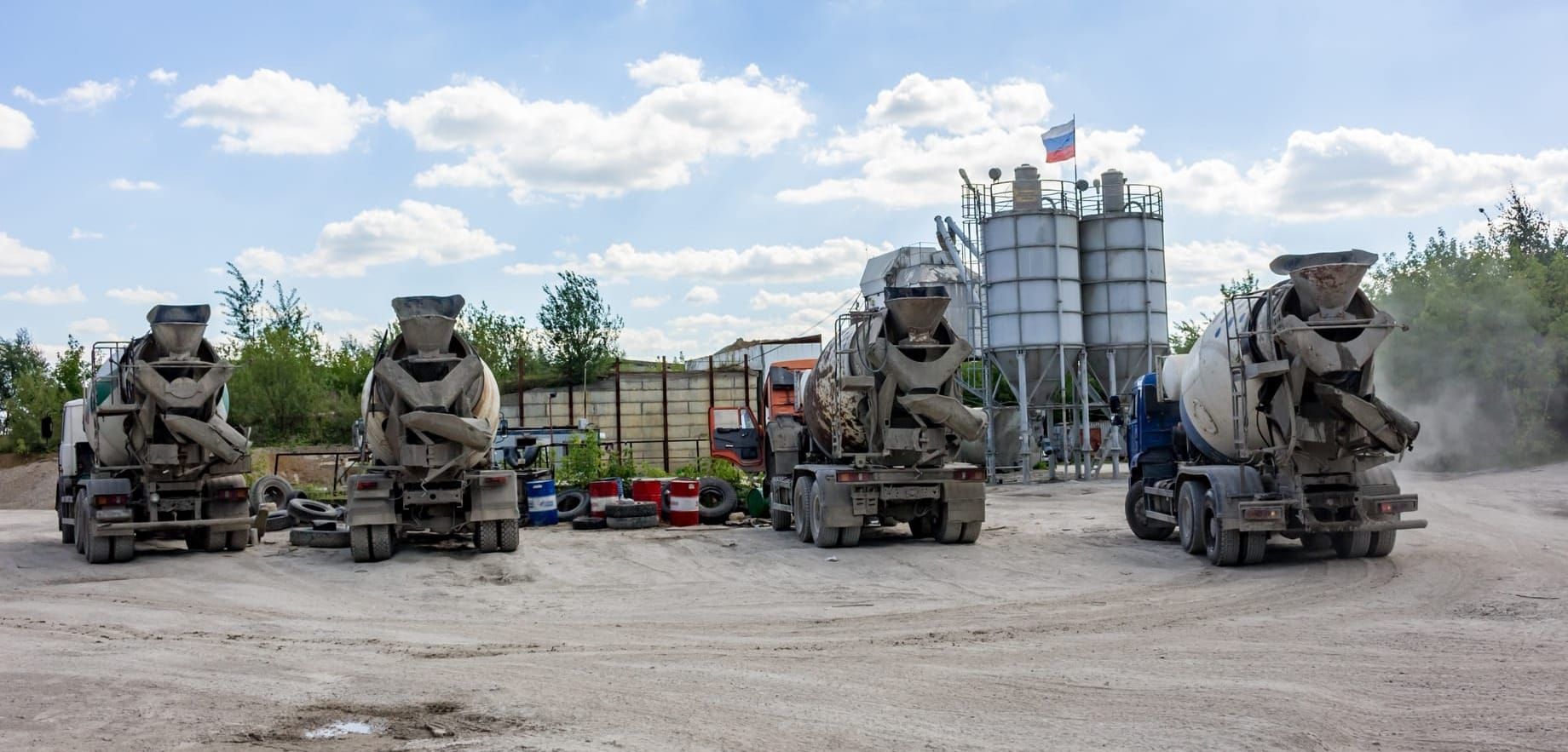
Cement production (or more strictly the process involved in making Portland cement) is both a high GHG emitter, and a really hard to decarbonise industry. Part of the decarbonisation challenge comes from the chemical process involved in converting limestone into lime. This process alone generates c. 3% of global GHG emissions. Given that it's an integral element in the production of cement, this is really hard to reduce. On top of this cement production requires an enormous amount of heat. The calcinated limestone is heated to 1,450-1,500 degrees Celsius, in a rotary kiln to create what is known as clinker (it's this clinker that is ground to create cement).
In terms of GHG emissions, typically just over half come from the chemical reaction as the limestone is turned into lime. A further 40% comes from burning fossil fuels to heat the kilns to the temperatures needed. And the last 10% of emissions come from fuels needed to mine and transport the raw materials.
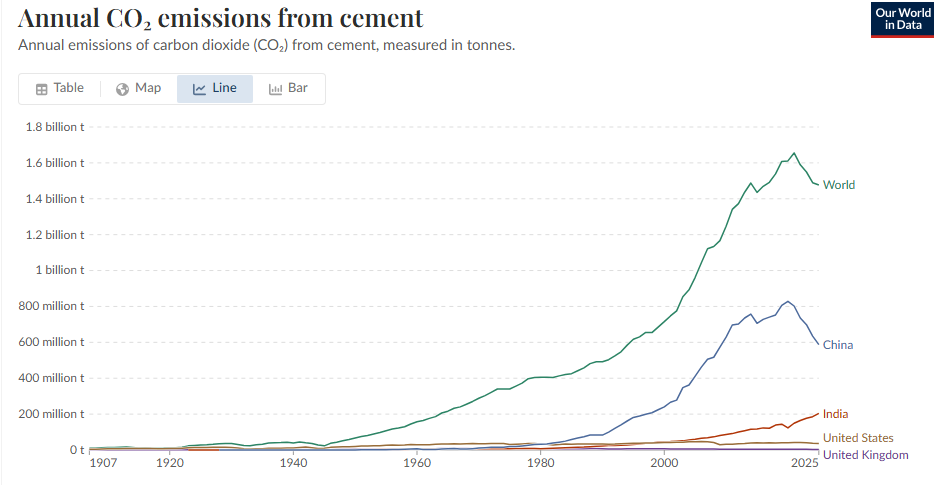
According to Chatham House (Dec 2020) "each year, more than 4 billion tonnes of cement are produced, accounting for around 8 per cent of global CO2 emissions."
Unsurprisingly, as our world has become more urbanised, we have used a lot more cement (& concrete). We seem to be past the peak, but global cement use is still very high. After all it's a really useful construction material.
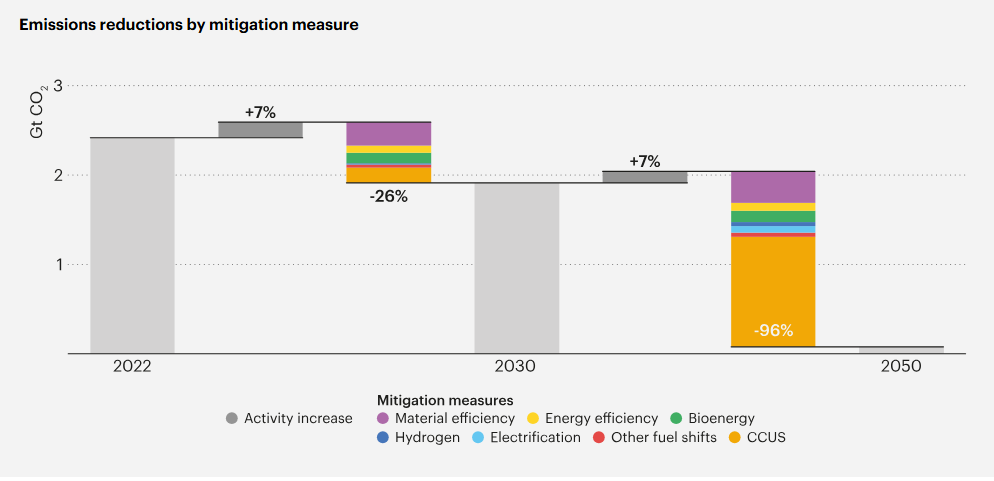
Conventional wisdom is that to make concrete more sustainable we need to focus on decarbonising the production process for traditional Portland cement. This is largely the underlying assumption in the IEA Net Zero pathway analysis, with short term measures such as material efficiency dominating out to c. 2030, and Carbon Capture (CCUS) playing a major part out to 2050.
Is decarbonising existing cement plants the best solution ?
But is this really the best way to make cement more sustainable, especially given the cost and technology issues around CCSU?
So what are the options? One is alternatives to concrete in construction. We have already written quite extensively on using timber as an alternative to concrete as a buildings material. Timber is a great building material. One target is to use more timber as a structural material, which requires some new thinking by engineers. We need new design approaches, including a greater re-use of reclaimed timber.
 Steven Bowen
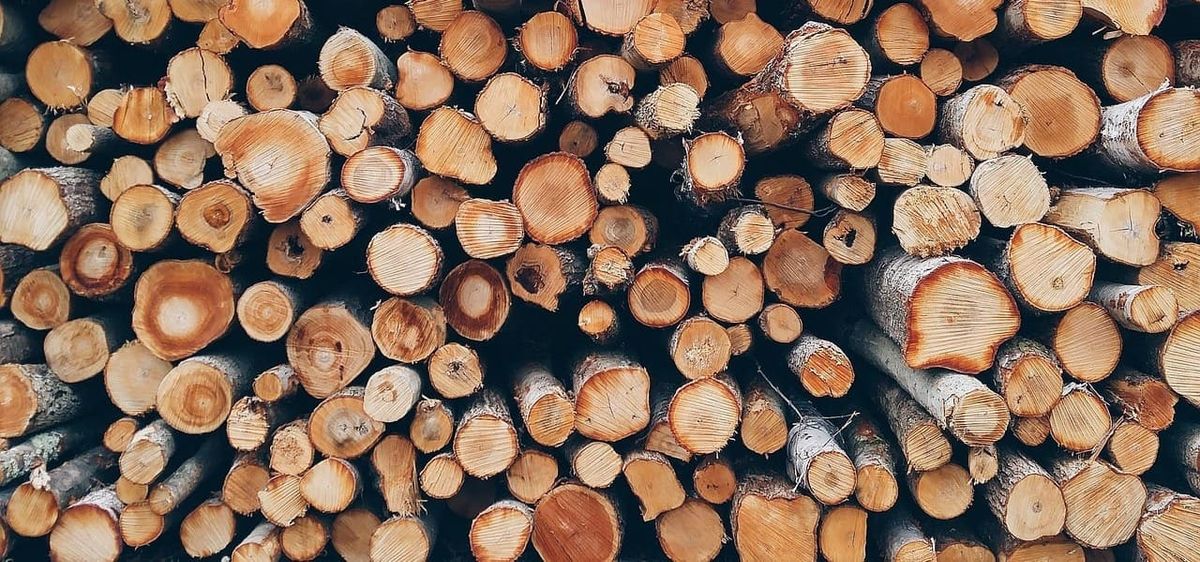
And some specialists have argued that using more timber in construction can also be a practical carbon capture approach.
 Steven Bowen
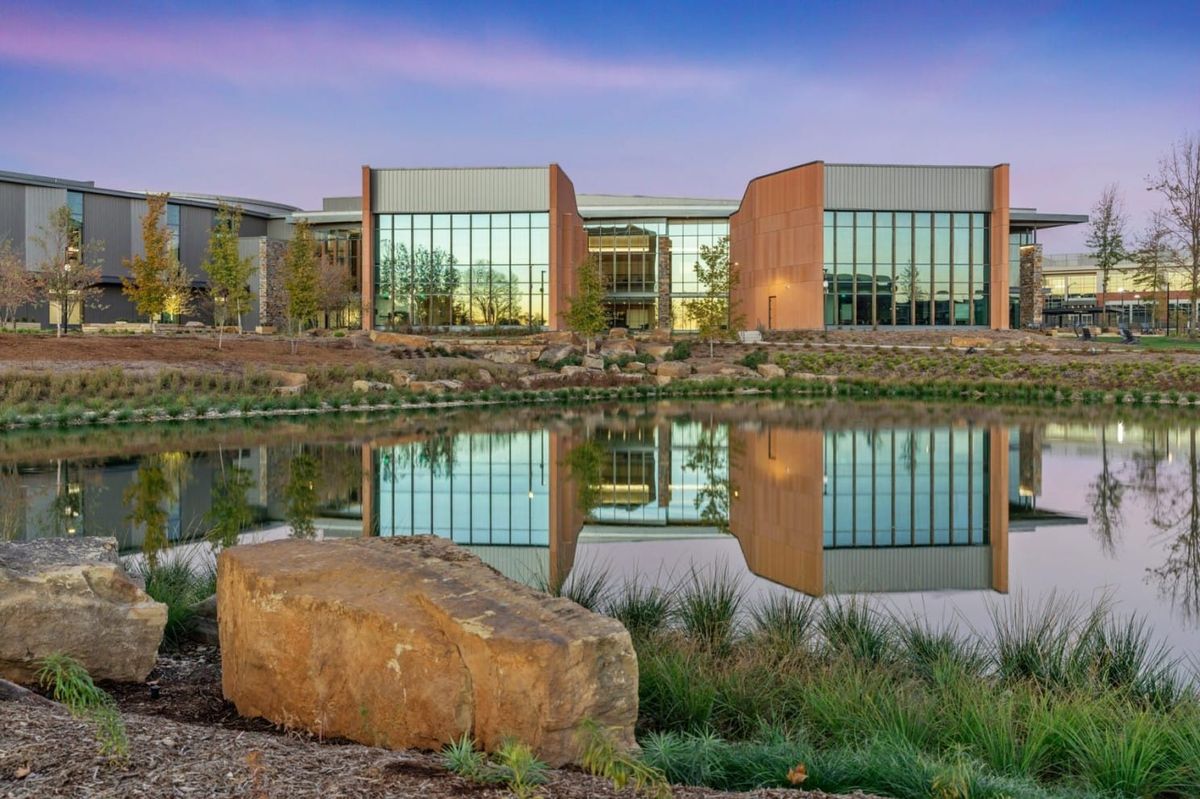
But timber is never going to fully replace concrete & steel. Among the technical issues that need to be considered are fire safety, and timber structure durability. Plus, timber can never have the mass that concrete offers, something that is really useful (if not essential) for concrete uses such as building foundations and dams.
Yes, we can also re-use 'old' concrete, but again that only takes us part of the way.
This means that we can cut concrete use a bit, by using alternative materials and by re-use. But we will still need some (probably a lot) of new concrete.
What about low carbon cement?
So we also need to find ways of using less Portland cement in our concrete. This range of solutions is called low carbon cement. Basically we add other materials that replace some of the Portland cement, while at the same time making concrete that is just as strong - but with much lower GHG emissions.
The 2020 Chatham House report covered some of this (chapter 3), and more recently the World Economic Forum highlighted the role that calcinated clay limestone cement could play in this transition. This has the potential to massively cut GHG emissions from the production of cement.

The process gets a bit complicated but it's worth following, at least at a high level. Calcined-clay limestone cement (LC3) still uses the traditional materials of clay and limestone but it processes them in a radically different way.
The clay is calcined and heated enough to drive off water locked inside its structure and break down its original crystal form. This leaves it chemically unstable and highly reactive. The limestone is ground fine, which gives it far more surface area for reaction.
Neither of these changes does much on its own, but the two put together activate each other. When combined with the remaining Portland cement clinker, the three react to seal the pores, giving the resulting concrete its strength.
In early testing, cement made this way, with high emitting Portland cement clinker use cut nearly in half, has already outperformed traditional Portland cement in strength while cutting emissions on two fronts. Less clinker means less of the chemical reaction that releases CO2. And, because the clay is heated at roughly half the temperature required for clinker production, LC3 also directly reduces industrial energy demand.
According to the research quoted in the WEF report, these two effects combined bring emissions down by up to 40% compared to ordinary Portland cement.
So, it feels like as investors we have a pathway to making construction more sustainable. Through a mixture of using timber where practical, re-use of old concrete, and low carbon cement, we can materially cut GHG emissions. Not a perfect solution, but one that buys us a lot of time while we find lower carbon ways of producing Portland cement.
BUT, who we engage with on these topics is different. It's not just the cement companies, it's everyone involved in the construction process, from designers, through to those who own the buildings.
One last thought
While decarbonising cement (and hence concrete) production should be our ultimate aim, in the meantime we can help by using less new concrete. Part of this will be from using other materials such as engineered timber, but we can also use less of it, while still achieving our design aims. We should not underestimate the impact that design codes and updated engineering design best practice could have.
 Steven Bowen
Grant me the strength to accept the things I cannot change, the courage to change the things I can, and the wisdom to know the difference. Reinhold Niebuhr - a Lutheran theologian in the early 1930's
Please read: important legal stuff. Note - this is not investment advice.