Sunday Brunch: the risks around new technology
Investors think about risk weighted returns. And solutions that need considerably more development or a lot of cost reduction are more risky. Which require much higher potential financial returns to make them attractive. This has real implications for the funding of some sustainability solutions.

"Cultured meat has emerged as a promising option, offering potential benefits such as reduced environmental impact, improved animal welfare, and nutritional customization. However, large-scale implementation remains limited by technological, economic, ethical, and social constraints. " - Ana Carolina Agne Ferreira Zão et al , Journal of Food Science Feb 2026
There are all sorts of investments that sustainability focused investors could make. Investments that could (potentially) help to solve many, if not all, of our most pressing climate related challenges. But, before we call for investors to do this, we need to think some more about which type of solution best works for mainstream equity and debt investors. And which solutions might need more thought, possibly targeting specialist funds.
Sustainability focused investors learn, sometimes by bitter experience, the reality of the technology 'valley of death'. This is where apparently good solutions do not make it to full commercialisation. The failure is often not because the technology doesn't work. It simply fails to scale at a viable cost.
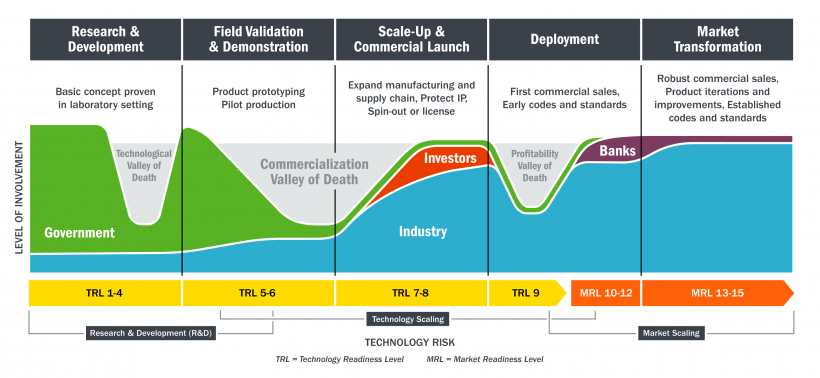
These solutions, struggling to try to bridge the commercial 'valley of death', can be found in the left hand end of the chart above. By contrast, many other sustainability related investments sit at the right hand end, much lower risk, and hence requiring a proportionally lower financial return.
This divsion into lower and higher risk has very real implications for how mainstream investors will respond to our sustainability challenges.
The good news is that the solutions to the right of the chart have got themselves into the zone where the technology is proven at scale and pretty much cost competitive. Think here - falling costs for solar & wind renewables, for battery storage and for EV's. According to BNEF, global investment into the energy transition hit a record $2.3 trillion in 2025, up 8% from the prior year. And most of that went into electrified transport, renewable energy, and grid investment. All industries and solutions that are massively ramping up.
 ocatsaros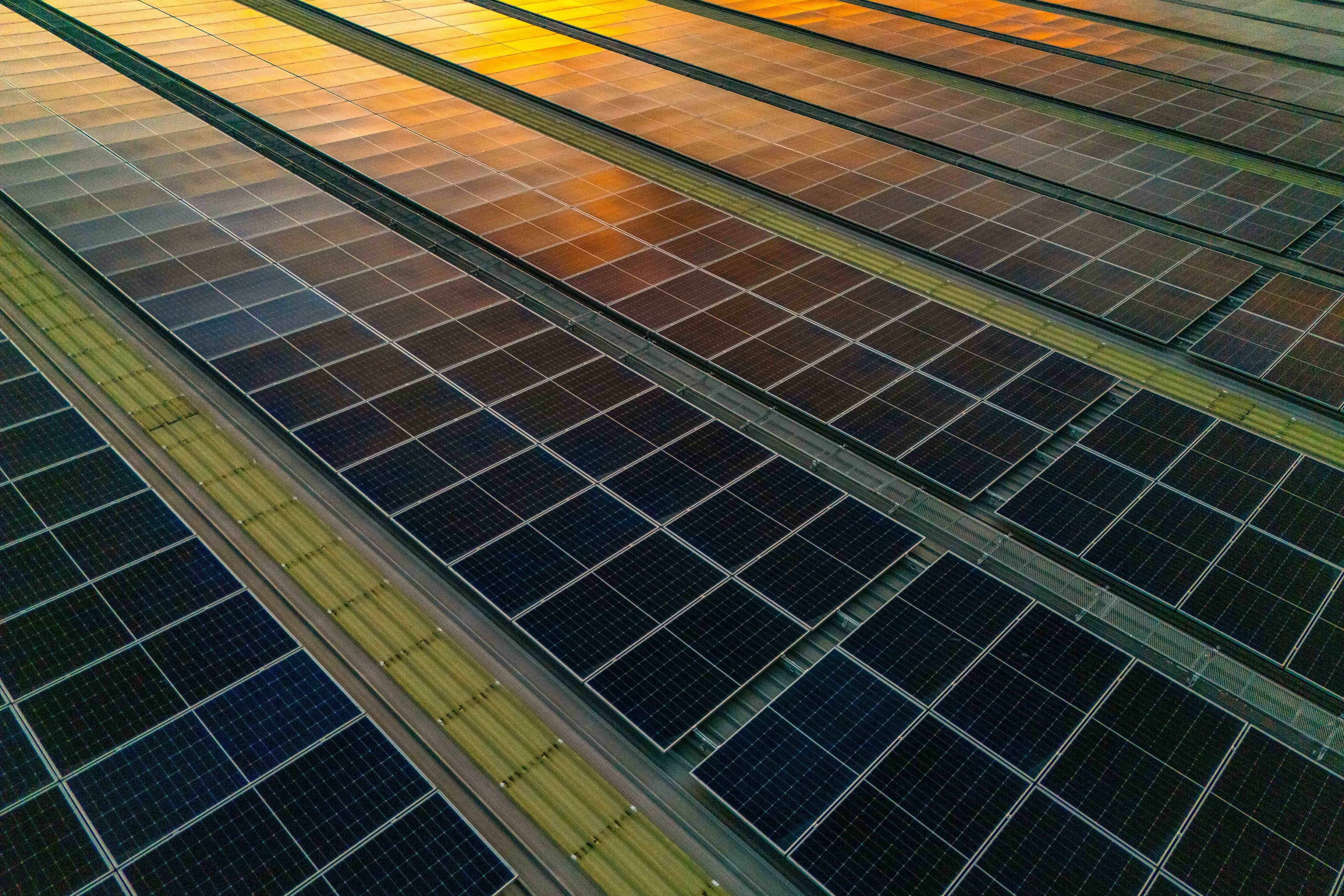
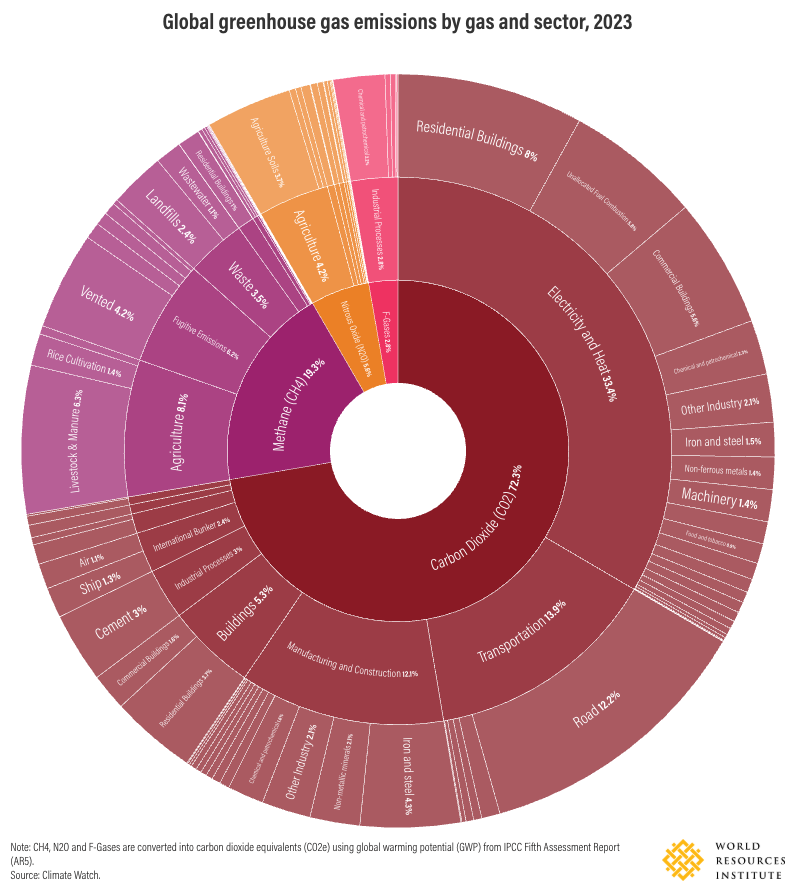
But not all sustainability investments look like this. Many of the current best solutions in cement, steel, chemical's and agriculture/food require both further technological development, and some pretty eye watering reductions in cost. Which is a good part of the reason why money is not flowing into these sectors in the same way as it is for electricity and transport.
Which is a shame as these activities are very material generators of GHG emissions and other environmental harm.
My point here is that if you have a risky project where the technology is not fully developed, and your cost to the end consumer is materially higher than already established competitors, then your funding options are more limited. And it gets even harder if you need a lot of upfront investment in expensive kit. Sadly, many sustainability related solutions sit in this box.
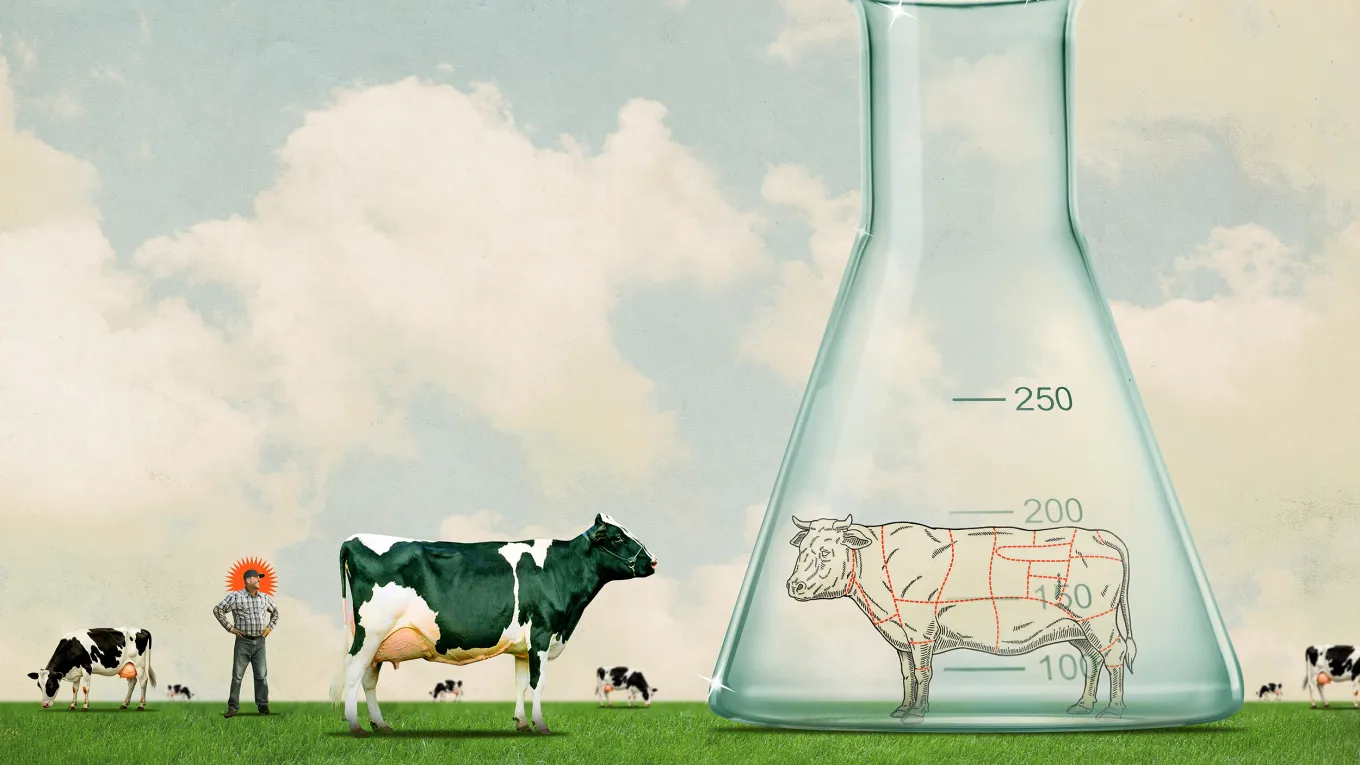
We have written in the past about cement, steel and green buildings. A recent blog from Wageningen University prompted me to think some more about food, specifically cultured meat. They make the point that "cultured meat is a promising solution: less animal suffering, less land needed and less of a burden on society."

I am not saying it is impossible to get mainstream investors to invest in these solutions, especially if they do so indirectly (via a large company that also has a lot of much less risky activities). In fact this might be the best way to fund the development these solutions need, and to de-risk them. And for those that don't sit in this bucket - this is where we need to get governments to step in with support.
This might be way more productive than them funding CCS and green hydrogen?
One last thought
Sometimes the best solution, at least in the near term, is to use less of the high emitting material. This might be easier than you first think. Take cement (or more strictly concrete) as an example. There are all sorts of ways of using less cement (and I say this as a ex civil engineer). These include re-use of existing beams and columns, and the use of alternative materials such as timber (especially gulam).
But, this approach means we need to target a different set of companies, in this case those who build (or who design and specify) new buildings.
 Steven Bowen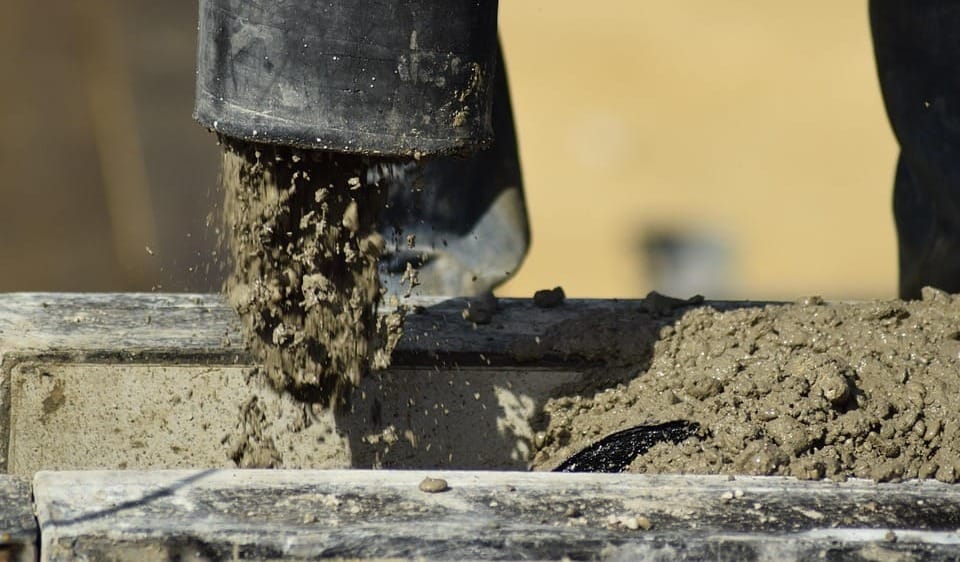
Grant me the strength to accept the things I cannot change, the courage to change the things I can, and the wisdom to know the difference. Reinhold Niebuhr - a Lutheran theologian in the early 1930's
Please read: important legal stuff. Note - this is not investment advice.